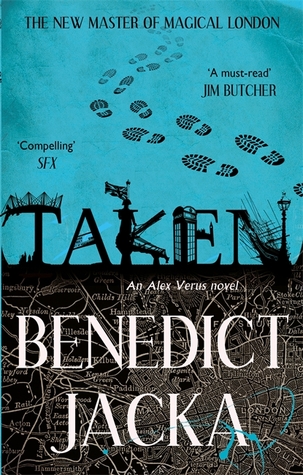
I’m still enjoying this urban fantasy series set in modern day London’s magical underworld.
Alex worries for his own apprentice, Luna, when several young trainee wizards start disappearing and things come to an exciting head at a magic dueling tournament in an old enchanted house in the countryside!
I have these books in my Amazon wish list and regularly check to see if they’re on offer, at which point I eagerly buy and read them.
I enjoyed The Ninth House by Leigh Bardugo, so when this was on sale at Audible I bought it. Well, it took me a very long time to finish it. I started it and got bored, so I listed to a couple of different audiobooks, then tried again, then got bored again, and left it, and finally decided to finish the experience on my holiday in Wales this September (I hate not finishing books).
The Ninth House (which I did enjoy) was an ‘urban fantasy’ in that it was set in the ‘real world’ but with a paranormal magical hidden society existing along side ‘real life’. Six of Crows, however, is more classic fantasy in that it is set in a completely made up world with all the classic fantasy tropes of a sort of medieval street urchin society with warring overlords and groups of people with different magic traits/abilities. I remember liking that sort of thing in my youth, but either I’ve grown out of that, or this just wasn’t an example of the genre that piqued my interest but I found it turgid and boring and annoying. There were several narrators, and one of them really annoyed me as well. Lol. Didn’t love it.
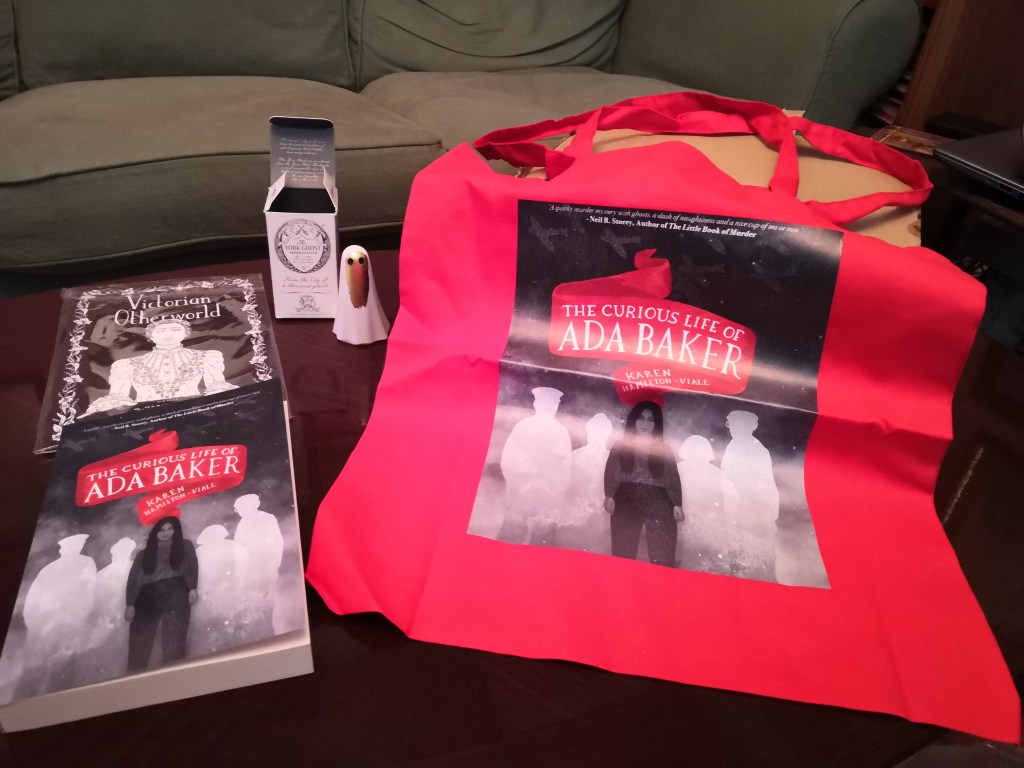
I won this book on a twitter competition and I remember entering because I thought it sounded just like the kind of book I enjoy. There was no obligation with the prize to write a review. (This is how I began my review which I posted on Amazon – I know from experience how valuable Amazon reviews are! The rest of the review is just copied and pasted below.)
The main character, Ada, has always had the ability to see dead people (not in a scary way – more like the relationship between Lydia Crow and her nerdy ghost flatmate in Sarah Painter’s Crow Investigations book series, or the ghosts in the TV comedy show Ghosts!). There are elements of history as there are ghosts from different time periods, as well as nods to Ben Aaronovitch’s brilliant Rivers of London series and C.K. McDonnell’s (also brilliant) Stranger Times books.
I read the book in a couple of days, and I liked it a lot. I hope this is the first in a series and I will look out for more books by this author.
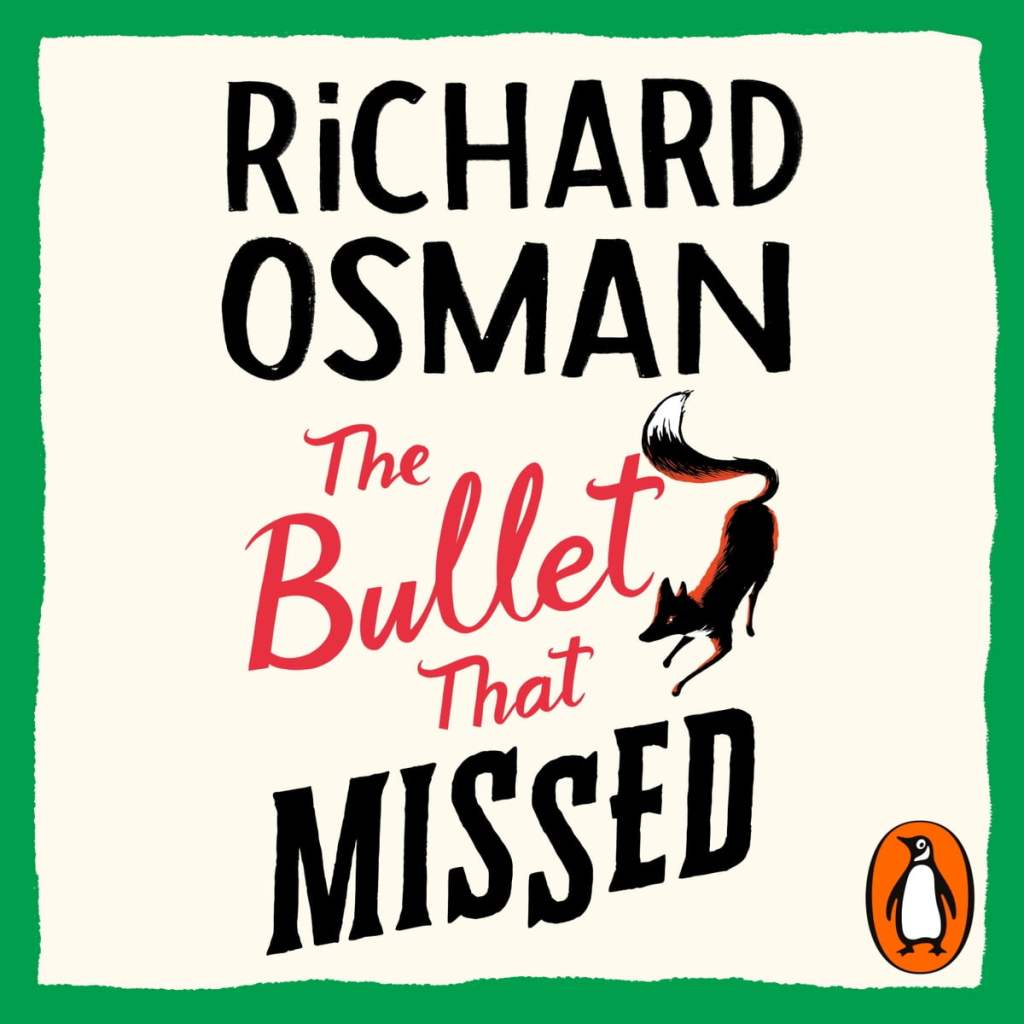
I am still enjoying Richard Osman’s gentle and fun series. Imagine that the Scooby Doo team are British (mostly) old people and the Mystery Machine is a nice retirement village you will get a picture of these stories. They even have a dog now. With their links so the police service, and some of them being retired spies, as well as the strong moral code and general bonhomie the Thursday Murder team will always catch the bad guy and maybe give him or her a nice cup of tea while they wait for the police to arrive!
For me, the experience of a lot of this audiobook is a bit of a lucid-dream-like blur. My daughter got married in September, and My husband drove with me and one or our sons through the night down from Northern Ireland (where we live) to the very south of Ireland to get the ferry to the south of Wales were the wedding was being held. I wanted to stay awake during the drive because I somehow feel that will help hubby to stay awake and not kill us all (!). He doesn’t like listening to anything in the car (music or podcasts etc) so I listened to my audiobook on my earphones. I thought I was awake and listening, but thinking back things are a bit muddled. Hmmm. I think I will maybe listen again sometime!
After the Wedding we had a short holiday in the beautiful Welsh town of Tenby and I finished listening to the book on my morning (hilly but lovely) runs. I was halfway through a run when the book ended and the inevitable post book interview began. Oh no! I thought, I’ll have to listen to more awful bum kissing (both the author interviews after books one and two are all: I love you, no I love you, you’re the best author ever, no, you’re the best narrator ever, and so on…). I couldn’t be bothered switching to a new book mid run, but I was pleasantly surprised that the interviewer was Steph McGovern and she asked sensible and interesting questions instead of just oozing sycophancy. Yay!
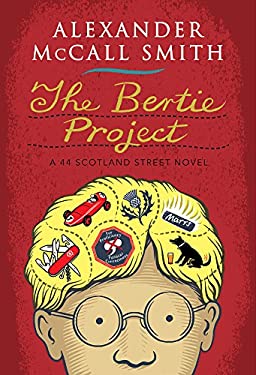
The Bertie Project – Alexander McCall Smith -21.09.22
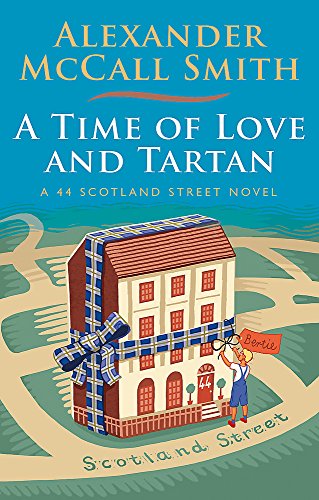
A Time of Love and Tartan – Alexander McCall Smith – 29.09.22
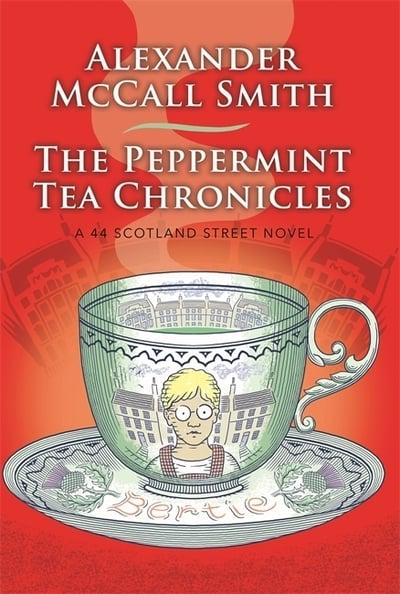
The Peppermint Tea Chronicles – Alexander McCall Smith – 02.10.22
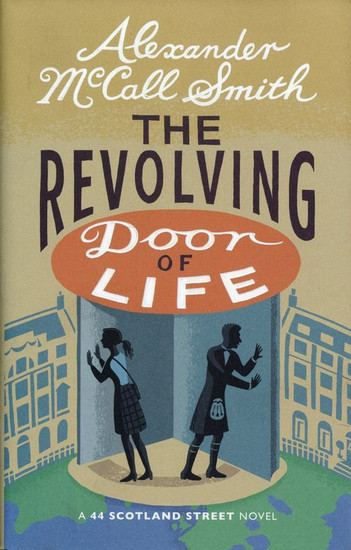
So, I started reading The Peppermint Tea Chronicles on my kindle, but then realised that I hadn’t read at least one previous book in the series, and found I had three paperbacks from the series in my ‘to be read’ pile, starting with The Revolving Door of Life, so I stopped The Peppermint Tea Chronicles, to catch up. I was almost finished The Revolving Door of Life, when I remembered how it ended, so I must have read that one before!
Well, reading these four books in a row was fun, if a little repetitive (in fact A McC S seems to repeat the same anecdotes in more than one book) and occasionally confusing (Bertie’s friend Ranald Braveheart etc is sometimes at the same school and sometimes not…?) but on the whole I enjoyed the experience.
As is typical of the series, there is gentle storytelling and philosophising and lots of joy and positivity. I will keep reading these books (it was also fun because I had a trip to Edinburgh earlier in the year and so recognised some of the landmarks so lovingly referred to).
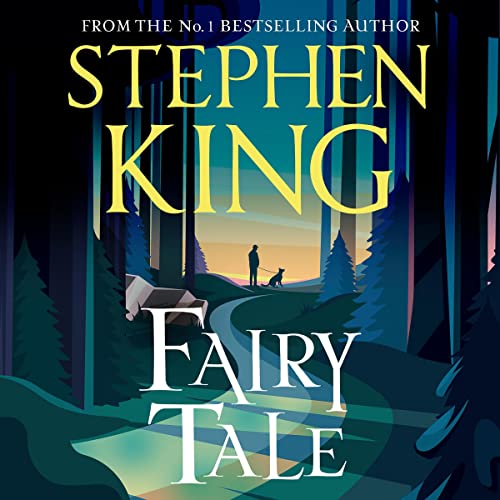
I really loved this book! I’ve read a few Stephen Kings, but this was very different – not horror (although there were some moments of gruesome violence), but, as the title proclaims, this is a fairy tale. The main character is a seventeen year old American boy, Charlie, who lost his mother to a road accident and whose father is struggling with alcoholism brought on by the grief.
Charlie goes out of his way to help an elderly man who had fallen and broken his leg, and ends up caring for the man’s aging dog. I found the relationship Charlie forms with the dog, and the anguish he feels as the dog’s health declines very moving and I could understand the motivation he felt when the man died and left him the key to a whole other world where a way to give the dog her youth back existed but also great dangers.
Charlie’s future adult self narrates the story, so we know he survives, but that doesn’t take away from the tension which is really more about his choices: whether he does the right thing or saves his own skin, and who or what he has to sacrifice along the way.
I was totally gripped by the plot, and very invested in all the characters. I found the book moving and engaging and I am in awe of Stephen King’s amazing storytelling ability.
I’m a big fan of the Cormoran Strike novels, and so I was very excited for this next installment. Hmmm. I think (as many other reviewers have said) that listening to this as an audiobook was probably not the best way to enjoy it. It is a book set largely in the online world, with many tweets and online forum chats, and the poor narrator had to read out all the hashtags and i.p. addresses and long handles etc that you (or at least I) would just let your eyes skim over if you were reading it. Listening to all those strings of letters and numbers and symbols was excruciating and made me begin to lose the will to live, and I found the book very hard to get into for that reason.
That aside, I mostly really liked it, although overall I’d say less than previous books in the series. I did enjoy more character development of Strike and Robin although the drawn out will-they-won’t-they is beginning to grate on my nerves a little. The narrator was fabulous, and I liked the unfolding of the plot. I kind of half guessed whodunnit quite early on, and was inwardly shouting at Strike and Robin for not seeing what I thought was obvious (I know hind sight is wonderful, and I wasn’t totally right in my workings out) also, I think it’s probably good psychology to let the reader work out some things ahead of the detectives, so we can feel clever.
Of course I will continue buying and reading/listening to the books in this series, and watching the TV adaptations and I read that J.K. Rawlings has a definite end point in mind so things will wrap up nicely eventually, which is good, but also sad because I don’t want it to end!
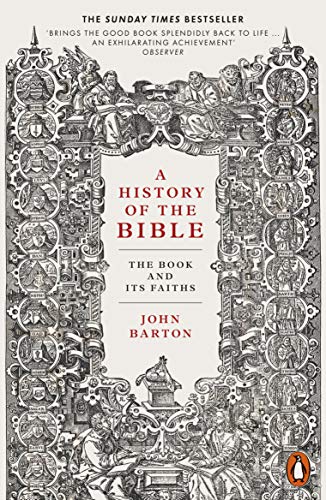
It’s rare for me to finish a non fiction book, because I usually get bored and annoyed at how they tend to be so long winded about everything. This book was a bit boring and longwinded at times, but I did finish it because it’s a subject that I found really interesting.
I was raised in a home that was first Baptist, then charismatic Christian Fellowship church going and daily Bible reading was part of my home life. I’d say that my parents were fundamentalists, in that they believed that every word of the Bible was true and most of it (except for the parts that were spelled out as parables or imagery) as being literally true.
So my knowledge of the bible was very much one sided – I knew very little about the history of the scrolls and codices that were the ‘original’ bible books, and about the different translations and changes that they have undergone. My grandparents, staunch Brethren, believed that the AV version was The Word and any changes to it were terrible, as if the original authors wrote in formal English!
I thought that this book was refreshing in that it presented the historical facts (or at least the facts that the evidence point to) and discussed them without pushing an agenda – it can be difficult finding objective information about emotive issues because people on all sides want to shout out their opinions and interpretations.
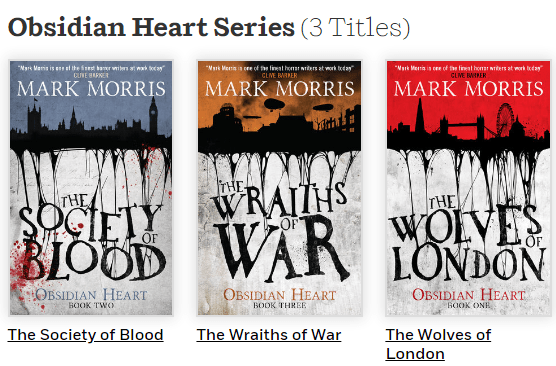
The Society of Blood: Obsidian Heart, Book 2 – 29.08.22The Wraiths of War: Obsidian Heart, Book 3 – 03.09.22
Wow – I have been totally engrossed in these audiobooks (about 40 hours in total) for the last couple of weeks. The series is a kind of urban fantasy, time travel, magical thriller/horror sort of thing, and I loved it.
The first book – The Wolves of London, is quite confusing, as the reader, along with the protagonist, is trying to work out what the heck is going on with his life. Alex is a good person, although he has a prison record from being caught up with some bad sorts in his youth. When his daughter’s life is threatened by some scary drug lord types, Alex calls on his old prison mentor for help. He ends up having to steal a small piece of obsidian, in the shape of a human heart, and as soon as he touches it his life spirals in a bad way. His younger daughter is kidnapped, and weird horrific magical creatures start chasing him.
The second book, The Society of Blood, is largely set in Victorian London, where Alex has been taken by a nasty baddy. It’s quite steampunky with creatures who are part human and part machine and lots of pea souper induced mystery and atmosphere. In this book Alex starts to work out some of the mysteries that surround him and to understand his part in them.
The third book, The Wraiths of War, see Alex living through World War One, as he has to fulfill the time loop obligations by doing the things that his future self had done to help his past and present self to escape from the many near death situations he has been in! I think that the time travel thing is really well done – the writer explores all the questions that thinking about time travel raises and addresses them in a interesting and believable way – I didn’t see any glaring plot holes that you sometimes see in this type of fiction.
I found myself glued to the whole series, and rarely if ever bored (a hard enough thing even in a single novel to keep from dipping in the middle). I liked the characters, I thought there was just the right balance between humour and seriousness and enough tension and intrigue to keep me guessing and not always seeing the twists. I liked the narrator on the whole, occasionally he parsed phrases strangely, but maybe there isn’t’ much time to fix things like that(?). Also, I thought it was a bit weird that when Alex was talking to older versions of himself, the older ones were posher – the older the posher. I suppose this was to distinguish the two voices for the listener, but I wondered why would he get posher?
I wasn’t sure I loved the ending- all three books build up to this big reveal, and then when it happens it seems a bit rushed and a bit of a let down. Hmmm. Pity, because up till then I was ready to review the books with nothing but gushing superlatives. Still, I don’t think that’s enough to stop me from loving the series, and in fact, the more I think and digest the ending, the more fitting it actually seems.
This book follows two parallel stories, one set in the 16 hundreds, and the other in the 1980s. Both are told from the perspective of young children – Mayken, a young Dutch girl aboard the infamous ship Batavia, famous in real live for the horrific events surrounding its shipwreck near an island off the coast of Australia, and Gil, a boy sent to live with his grandfather on the island where the Batavia wreck survivors came ashore centuries before.
Gil and Mayken’s stories have many similarities – they both just lost their mothers and have been schooled in what to tell people to hide the truth of how they died. They both feel like outsiders, struggling to find their way and not fitting into the roles society expects from them, and they both suffer horrible abuses at the hands of bad people.
I have loved everything I’ve read by Jess Kidd before, but for me this book lacked the humour and quirkiness of her other books and was just very dark. I don’t know if it’s because I read it after The End of the Day (which I loved, but which had some very bad people in it) and The Gameshouse (which again, had some very bad people doing very bad things to other people) and I’ve just had my limit of reading about bad people. I actually felt depressed and a bit nihilistic after reading this, like, how can anyone live in a world with so much cruelty. It’s probably unfair, because there were good and noble characters as well, and the book is certainly gripping and cleverly written, but my thoughts about it are negative because of the way it made me feel.



 Sarah Wray Writer