I really loved this book! I’ve read a few Stephen Kings, but this was very different – not horror (although there were some moments of gruesome violence), but, as the title proclaims, this is a fairy tale. The main character is a seventeen year old American boy, Charlie, who lost his mother to a road accident and whose father is struggling with alcoholism brought on by the grief.
Charlie goes out of his way to help an elderly man who had fallen and broken his leg, and ends up caring for the man’s aging dog. I found the relationship Charlie forms with the dog, and the anguish he feels as the dog’s health declines very moving and I could understand the motivation he felt when the man died and left him the key to a whole other world where a way to give the dog her youth back existed but also great dangers.
Charlie’s future adult self narrates the story, so we know he survives, but that doesn’t take away from the tension which is really more about his choices: whether he does the right thing or saves his own skin, and who or what he has to sacrifice along the way.
I was totally gripped by the plot, and very invested in all the characters. I found the book moving and engaging and I am in awe of Stephen King’s amazing storytelling ability.
I’m a big fan of the Cormoran Strike novels, and so I was very excited for this next installment. Hmmm. I think (as many other reviewers have said) that listening to this as an audiobook was probably not the best way to enjoy it. It is a book set largely in the online world, with many tweets and online forum chats, and the poor narrator had to read out all the hashtags and i.p. addresses and long handles etc that you (or at least I) would just let your eyes skim over if you were reading it. Listening to all those strings of letters and numbers and symbols was excruciating and made me begin to lose the will to live, and I found the book very hard to get into for that reason.
That aside, I mostly really liked it, although overall I’d say less than previous books in the series. I did enjoy more character development of Strike and Robin although the drawn out will-they-won’t-they is beginning to grate on my nerves a little. The narrator was fabulous, and I liked the unfolding of the plot. I kind of half guessed whodunnit quite early on, and was inwardly shouting at Strike and Robin for not seeing what I thought was obvious (I know hind sight is wonderful, and I wasn’t totally right in my workings out) also, I think it’s probably good psychology to let the reader work out some things ahead of the detectives, so we can feel clever.
Of course I will continue buying and reading/listening to the books in this series, and watching the TV adaptations and I read that J.K. Rawlings has a definite end point in mind so things will wrap up nicely eventually, which is good, but also sad because I don’t want it to end!
It’s rare for me to finish a non fiction book, because I usually get bored and annoyed at how they tend to be so long winded about everything. This book was a bit boring and longwinded at times, but I did finish it because it’s a subject that I found really interesting.
I was raised in a home that was first Baptist, then charismatic Christian Fellowship church going and daily Bible reading was part of my home life. I’d say that my parents were fundamentalists, in that they believed that every word of the Bible was true and most of it (except for the parts that were spelled out as parables or imagery) as being literally true.
So my knowledge of the bible was very much one sided – I knew very little about the history of the scrolls and codices that were the ‘original’ bible books, and about the different translations and changes that they have undergone. My grandparents, staunch Brethren, believed that the AV version was The Word and any changes to it were terrible, as if the original authors wrote in formal English!
I thought that this book was refreshing in that it presented the historical facts (or at least the facts that the evidence point to) and discussed them without pushing an agenda – it can be difficult finding objective information about emotive issues because people on all sides want to shout out their opinions and interpretations.
The Society of Blood: Obsidian Heart, Book 2 – 29.08.22The Wraiths of War: Obsidian Heart, Book 3 – 03.09.22
Wow – I have been totally engrossed in these audiobooks (about 40 hours in total) for the last couple of weeks. The series is a kind of urban fantasy, time travel, magical thriller/horror sort of thing, and I loved it.
The first book – The Wolves of London, is quite confusing, as the reader, along with the protagonist, is trying to work out what the heck is going on with his life. Alex is a good person, although he has a prison record from being caught up with some bad sorts in his youth. When his daughter’s life is threatened by some scary drug lord types, Alex calls on his old prison mentor for help. He ends up having to steal a small piece of obsidian, in the shape of a human heart, and as soon as he touches it his life spirals in a bad way. His younger daughter is kidnapped, and weird horrific magical creatures start chasing him.
The second book, The Society of Blood, is largely set in Victorian London, where Alex has been taken by a nasty baddy. It’s quite steampunky with creatures who are part human and part machine and lots of pea souper induced mystery and atmosphere. In this book Alex starts to work out some of the mysteries that surround him and to understand his part in them.
The third book, The Wraiths of War, see Alex living through World War One, as he has to fulfill the time loop obligations by doing the things that his future self had done to help his past and present self to escape from the many near death situations he has been in! I think that the time travel thing is really well done – the writer explores all the questions that thinking about time travel raises and addresses them in a interesting and believable way – I didn’t see any glaring plot holes that you sometimes see in this type of fiction.
I found myself glued to the whole series, and rarely if ever bored (a hard enough thing even in a single novel to keep from dipping in the middle). I liked the characters, I thought there was just the right balance between humour and seriousness and enough tension and intrigue to keep me guessing and not always seeing the twists. I liked the narrator on the whole, occasionally he parsed phrases strangely, but maybe there isn’t’ much time to fix things like that(?). Also, I thought it was a bit weird that when Alex was talking to older versions of himself, the older ones were posher – the older the posher. I suppose this was to distinguish the two voices for the listener, but I wondered why would he get posher?
I wasn’t sure I loved the ending- all three books build up to this big reveal, and then when it happens it seems a bit rushed and a bit of a let down. Hmmm. Pity, because up till then I was ready to review the books with nothing but gushing superlatives. Still, I don’t think that’s enough to stop me from loving the series, and in fact, the more I think and digest the ending, the more fitting it actually seems.
This book follows two parallel stories, one set in the 16 hundreds, and the other in the 1980s. Both are told from the perspective of young children – Mayken, a young Dutch girl aboard the infamous ship Batavia, famous in real live for the horrific events surrounding its shipwreck near an island off the coast of Australia, and Gil, a boy sent to live with his grandfather on the island where the Batavia wreck survivors came ashore centuries before.
Gil and Mayken’s stories have many similarities – they both just lost their mothers and have been schooled in what to tell people to hide the truth of how they died. They both feel like outsiders, struggling to find their way and not fitting into the roles society expects from them, and they both suffer horrible abuses at the hands of bad people.
I have loved everything I’ve read by Jess Kidd before, but for me this book lacked the humour and quirkiness of her other books and was just very dark. I don’t know if it’s because I read it after The End of the Day (which I loved, but which had some very bad people in it) and The Gameshouse (which again, had some very bad people doing very bad things to other people) and I’ve just had my limit of reading about bad people. I actually felt depressed and a bit nihilistic after reading this, like, how can anyone live in a world with so much cruelty. It’s probably unfair, because there were good and noble characters as well, and the book is certainly gripping and cleverly written, but my thoughts about it are negative because of the way it made me feel.
I loved Rose Tremain’s book, The Colour, which I read years ago and so when this one was 99p on kindle I bought it.
Lily is different from the books I’ve been reading of late – no magical realism or urban fantasy here – this is in some ways a very simple and straightforward novel set in Victorian England. Lily is a foundling – a baby abandoned in a park and rescued by a young police constable who watches over her from afar for most of her life.
The orphanage where he takes her sends babies to be fostered by families in the country until they’re six when they are returned to be taught ‘good Christian ways’ and a suitable trade.
Lily was happy with her foster family, which only made the transition back to the cruel and abusive treatment of the children’s home harder, but Lily is strong and feisty and survives, but at what cost?
I thought the book was beautiful – I really enjoyed reading it and read it quickly.
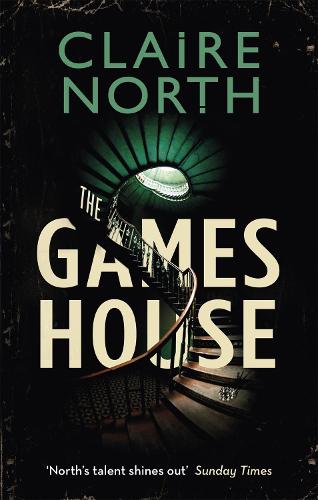
This is my sixth Claire North novel of the summer, and unlike the previous one, The End of The Day, which was my favourite so far, this one was probably my least favourite. It’s actually sometimes sold as three novellas (annoyingly, Amazon keeps trying to tempt me into buy them as similar to what I’ve been reading when they are what I’ve been reading!) all set at different periods in history but all revolving around the mysterious Gameshouse.
The first part, The Serpent, is set in seventeenth century Venice. In the Gameshouse, people gamble money, or maybe a number of years of their life, or their sense of taste or whatever, and the games they play involve real people and politics or even war. A woman whose husband has gambled away all their money is offered the chance to play to win the chance to make her own life.
The second part, The Thief is one that I liked the most. A man agrees to a game of hide and seek which will cost him his memory if he loses. It is set in Thailand in the 1930s and I enjoyed the ingenuity of the man travelling through rural and cityscapes evading capture.
The final part, The Master, set in contemporary time, has a player taking on the gamesmaster to win control over the gameshouse. He says his motive is to shut down the games house because he is troubled how it ‘plays dice with people’s lives’ and wars and deaths are nothing and any number of real people are easily sacrificed by players trying to win the games. There was a huge death toll in this story, and although I get that this is the point, both in this fictional gameshouse, and as an allegory holding up a mirror to real life where the decisions of world leaders can send men to war, or take away people’s livelihood without any personal cost in their own power games, I still found it a disturbing and uncomfortable read.
So, while I can appreciate the clever social commentary and once again by Claire North, unique storytelling, I didn’t so much enjoy reading this one.
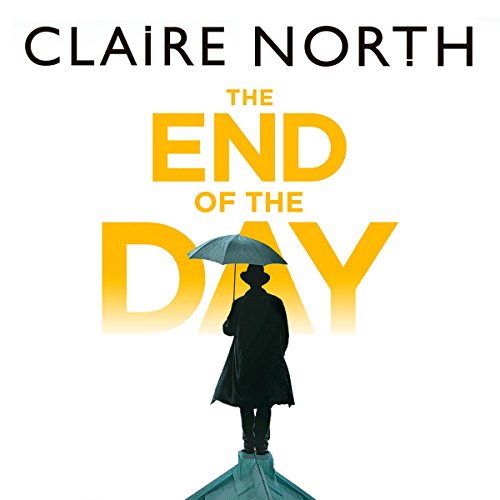
This is my fifth Claire North novel of the summer, and my favourite so far. In fact I would say it’s my new stand out favourite audiobook after Aperigon. I loved the narrator who really, I think, captures the spirit of the different characters and the narrative as well as doing an impressive array of accents!
The story follows Charlie, who applies for and gets the job of Harbinger of Death. As a rookie, he’s not really sure what he is doing, and is so sweet and calm and endearing stumbling along trying to always do the right thing. Poor Charlie travels the world, and meets the best and worst of people, but always honours their lives and acknowledges their importance. He is kidnapped, beaten and tortured, and held at gunpoint many times, but he only grows in wisdom and introspection, while still staying sweet and earnest.
As an audiobook, listening to the many soliloquies had me gripped and enraptured as Charlie, or the people he meets talk through their thoughts on life and the world: very thought provoking, but never boring or preachy.
I’ve had a really bad back of late, which seems to be my autoimmune arthritis flaring up in my sacroiliac joint, and my physiotherapist suggested I take up swimming. So I joined a gym with a pool and found swimming length quite boring until I thought of listening to audiobooks in the pool.
This book was included with my Audible account, and is the first book I put onto my waterproof mp3 player to listen to while swimming.
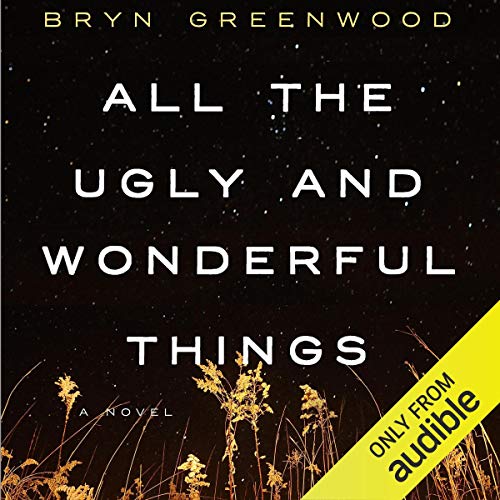
It tells the story of Wavy, born to an addict/schizophrenic mother and abusive criminal father and the very deep friendship/love affair she forms with a man who sometimes works for her father. It’s a difficult listen at times, because the relationship is very inappropriate, and yet kind of pure and good against the setting of the other things going on in Wavy’s life.
I found it quite mesmerising, maybe because swimming is so mindless that all my attention went to listening, and I really rooted for Wavy and Kellen to be happy and prevail against all the obstacles set in their way.
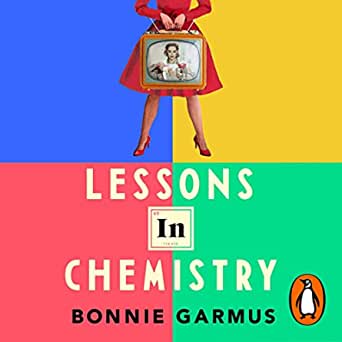
This was my book group read for over the Summer, and I chose to listen to the audiobook. I’ll admit that it took me a wee while to get into the book, and the early chapters had me annoyed at how beautiful the main character, Elizabeth Zott had to be and thought her relationship with Calvin was just another rom com thing. I was wrong.
Elizabeth Zott is a beautiful, extremely intelligent, plain spoken (probably on the autism spectrum. although this is not blatantly spelled out) woman trying to be taken seriously as a scientist in 1960s America.
She faces huge obstacles from her work being mocked and also stolen by her less intelligent male colleagues to being shamed and judged when she is sexually abused with the attitude of ‘well, what do you expect if you insist on putting yourself in a man’s place’.
The story is told from different points of view, including sections narrated by the dog ‘Six-Thirty’ who would probably be the most intelligent dog ever in the history of dogs, but who is wise and very likable!
I ended up really liking the book – even going on really long walks just so I could enjoy listening to the audiobook as I went!
At times the characters were a little caricatured – the baddies were super bad and the goodies were super good, but I think that only added to the charm, or fairy tale aspects of the story, and in fact it seems that in real life some people really are ‘super bad’ or ‘super good’.
(As an interesting aside, my hubby and I were talking about this very thing recently – he thinks that the existence of really wicked people proves the existence of supernatural angelic and demonic forces, but I disagreed. My argument is that if behavioural traits exist on a normal bell curve, then you would expect outliers at either end (ie a few people who are really good or really bad). It’s like probability. If something happens a million times, then we shouldn’t be surprised by a really rare ‘million to one’ thing happening one of those times – it doesn’t mean it’s a miracle, it’s just chance.) Anyway – back to the book…
Even though what women faced in this book was extreme , and we’ve come a long way from there, the misogyny still resonates unfortunately in today’s world and Elizabeth’s character is very relatable. I also loved her neighbour, a strong older woman and I liked how they drew support from each other.
The story had sadness and joy and humour and I think it’s a great book (I liked the narrator too!).