‘Surreal and Hilarious’ is the quote from The Guardian on the cover of this Audiobook and I have to agree. In my house, the quiz show ‘pointless’ is watched daily, and the two hosts, Richard and Alexander often riff with each other by one of them saying a blatantly untrue ‘fact’ and them discussing it in outrageous and nonsensical detail. This book reminded me of one of their riffs on steroids. I know and love Richard Ayoade from his show ‘travel man’ and his appearances on panel shows like ‘have I got news for you’ (I didn’t watch The Mighty Boosh, or the IT Crowd which he is perhaps most famous for) and so I was familiar with his dry often sarcastic wit. The book is a parody of overly pretentious navel gazing arty farty works and consists of Ayoade being interviewed by a second person who is also Ayoade on the subject of film and his relationship to it (he has directed two fabulously surreal movies: ‘Submarine’ and ‘The Double’ and appeared in one or two somewhat questionable movies as an actor). It is very strange. I loved that the audiobook was narrated by the author, even though he repeatedly cut in with asides asserting that the book really doesn’t work in this format and the listener really should have bought it as a physical copy. It made me laugh out loud at times, and just say ‘what the heck’ at others but on the whole, it was a very enjoyable experience.
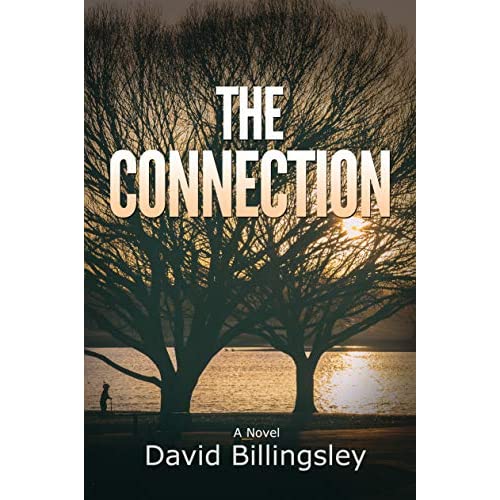
After I posted a link to this blog on Twitter, the author David Billingsley contacted me offering me a free pdf (or Kobo ebook) copy of his book in return for a review. I decided to just buy it on Kindle since I don’t like those formats and I found the premise of the book quite intriguing. For me, the book felt like a cross between Gilmore Girls and The Twilight Zone. Set in small town America (it’s a very American book, which unfortunately is off putting for me as a proud citizen of ‘anywhere but America’) it has a gentle slow feel as we get to know some of the people who live in the town and their backstories, and the mysterious element of a stranger who appears (naked) in town, and has a curious affect on people – most men get very angry and aggressive around him, and most women seem to want to marry or mother him. Like many books, the pace dipped in the middle and I struggled to retain interest, but it picked up again and the ending was somewhat satisfying. I didn’t love it, didn’t hate it. It gets a lot of good reviews from other readers, so it maybe just wasn’t my cup of tea.
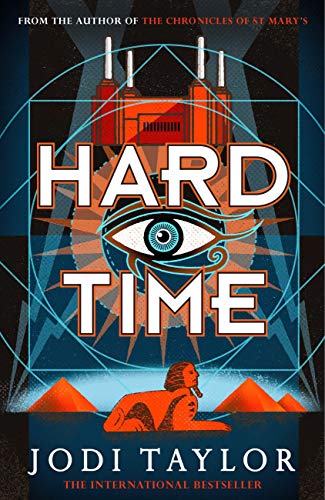
As is sometimes the case with books in the Jodi Taylor ‘St Mary’s’ or ‘Time Police’ series, it took me a while to get into this book, and I started to wonder if I have had enough of Jodi Taylor’s time travel sagas (I know, I should wash my mouth out with soap!), then the characters and plot started to grab me and I remembered why I keep coming back for more. Max’s son from the St Mary’s books is all grown up and a trainee at the Time Police Headquarters, and with the other members of ‘team weird’ he is busy being a maverick and not fitting it but managing to save the day with pluck and quick thinking just in the knick(ers) of time. I’ve read all the Jodi Taylor books, and while this would not be my favourite, it was still a good read and I will continue to buy and read the future books in the series.
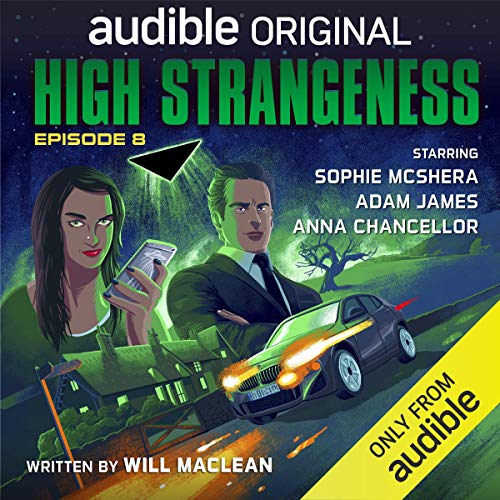
I started listening to an audiobook of a different novel called The Three Body Problem, by Cixin Liu, but I was feeling a little bit depressed and not in the right headspace for something so serious, so I abandoned it for now and listened to this instead. I’m glad I did, as this was a lot of fun – just what I needed to cheer me up! It’s an audible production with a cast and sound effects etc, so like a radio play and would appeal to fans of light-hearted British sci-fi (like me!). It’s like the love child of Dr Who and The X-Files, with a bit of Hitchhiker’s Guide to the Galaxy and Red Dwarf thrown in (you get the picture). It follows friends Cassie and Amanda who host a paranormal investigation website and get mixed up with real bad creatures from a parallel dimension and British and American special agents in a rural English village. It had laugh out loud moments as well as a rolicking plot and I really enjoyed listening to it.
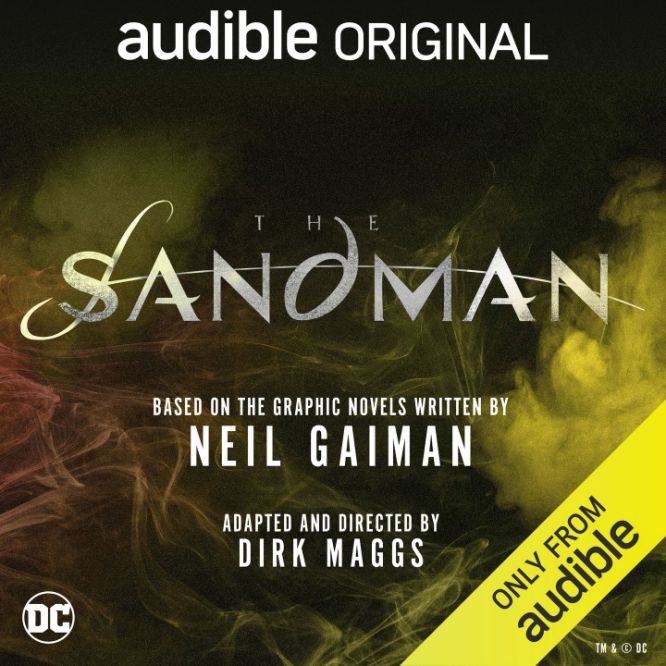
I’m a big fan of Neil Gaiman novels, and have read them all, but I’d never read The Sandman, because I kind of dismissed it as being a graphic novel, and therefore not much to it (!) Well, I was clearly wrong, as this Audible original production of The Sandman is a rich and satisfying series of interconnected stories based around Morpheus, or Dream, one of ‘The Endless’ who are immortal anthropomorphic personifications of human concepts such as death, desire, destiny, or indeed, dreaming. The audiobook has a large cast of talented actors, as well as narration by Neil Gaiman himself and is very well done. Some of the stories are quite gruesome and horrific, and others are more gentle and even sweet, but all have the surreal quality of dreams. (Apparently, the audiobook is just an adaptation of the first three volumes of the Sandman’s ten volume series – wow, there is so much in the first three volumes and it’s only a third of the total!). I’ve read some reviewers who are upset by the books outdated casual exploitation of women or members of the LGBTQ community, but as it was written in the eighties, it has to be viewed in light of the cultural habitus or zeitgeist of the time. I really enjoyed listening to this audiobook – I was gripped by the narrative and found the conclusions of the various story arcs to be satisfying . I loved the actor who played Death – she was chirpy and upbeat but also wise and kind. I liked the story about Shakespeare’s players performing A Midsummer Night’s Dream to the faerie folk, and the story about Rose Walker from The Doll’s House, although I could go on and list most or all of the stories as the ones I liked most, since I enjoyed the whole experience! I’m very excited because I just read that they are making a Netflix TV series of The Sandman (delayed by Covid…) hopefully it will appear before too long.
I’m not usually a fan of short stories, but I bought and read this for two reasons. Firstly, Anna Burns Novel, Milkman was my stand out read of 2019 – I absolutely loved it, and secondly, I was a third of the way through reading Underland by Robert Macfarlane, which is a very interesting and readable non-fiction book about all things underground. Although I am fascinated by all the interesting facts and anecdotes about underground tunnels, waterways, ecosystems etc, I struggle to maintain interest through a whole full length non-fiction novel. For me, all those facts would make a compelling story even better – they could be metaphors for the hidden depths of the characters, but without the storytelling ride, I just get bored and give up. So, for a bit of light relief, I read Mostly Hero. Now that was a fun ride! As you would expect from Anna Burns, the story is a bit out there and off the wall – it’s a self aware parody of the superhero genre, and I feel like it was probably multi layered with meaning and allegory but that I’m not smart enough to appreciate it (that didn’t matter though as I really enjoyed the romp). Superheroes, supervillains, femme fatales, shoot outs, secret hideouts, love, hate death, resurrection – it’s got it all. Great fun.
Hmmm, I’ll start with the positive – I thought Carl Prekopp’s narration of this novel was fabulous – I loved his soft northern accent and I thought his interpretation of the prose was spot on – like he was personally feeling the story – his soft quiet voice lent so much meaning and emotion to the words that I felt like I could listen to him saying anything. Just as well, really.
The premise was interesting – set in a version of 19th century England where books are considered evil and to be avoided because of their magical properties. I was quite interested in the first part, where the protagonist, Emmett Farmer is sent off to be an apprentice to an old woman bookbinder (considered a witch by many) because she sees in him the latent ability to create books. Emmett’s past is a ‘closed book’ to him, and when he and the reader start to find out what his backstory is, in my opinion at least, the book descends into fraught melodrama and romance novel drivel.
The final part picked up a bit, and I’ve read books that I’ve hated more, but I would not go so far as to say I liked this book. It was okay. Maybe just not my cup of tea.
I have been mesmerised by this novel for days – narrated by the author, who at first seemed to me to be somewhat jilted and strangely flat in his narration, but who actually drew me in until I was hanging on every word, I feel emotionally wrought, enriched and changed by the experience. It’s like when you come out of a really strong play with maybe only one or two cast members but that really packed a punch so that you feel like you have lived the trauma or journey with the characters. Apeirogon is set in Palestine and follows two fathers, one Jewish, one Muslim who both lose daughters in the violence there. Based on actual people the novel explores their journeys, their lives and their decisions to campaign for peace in the face of such tragic loss, but it tells the story in such a profound and beautiful, masterful, way that it is like a masterclass in ‘showing not telling’. I think the stark, simple and factual way the story is told, as well as the ‘random’ asides with facts related to peace and war and the struggles of people against people only serve to intensify the emotional punch of the experience without feeling that the book is being cheaply manipulative. I can go so far as to say that it’s my reading (or listening) highlight of 2020.
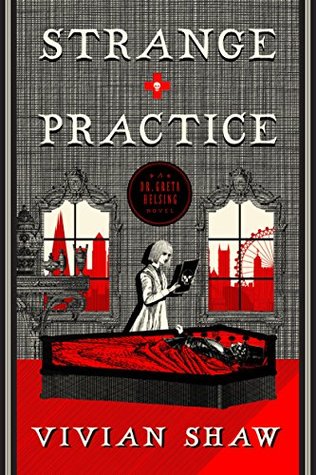
This book was a lot of fun to read, just my cup of tea! For fans of Sarah Painter’s Crow Investigations series, or Ben Aaronovitch’s Rivers of London books, it’s set within the supernatural sub-community of modern day London. This time, instead of a detective, the main protagonist is a doctor who specialises in treating non-human people. Greta Helsing is descended from the Van Helsing family, famous for Vampire hunting, but instead of hunting, she befriends and treats vampires, ghouls, were-people and other supernatural beings. Of course there are bad guys threatening the supernatural community and Greta and her companions have to track them down and fight them. I thought the book was really well written with sympathetic and well rounded characters and I very much enjoyed reading it. I was tempted to straight away buy the next two books in the series, but I was put off by the price for each being £5.99 on Amazon Kindle, when most of the books I buy are 99p daily deals. I might yet splash out because I really want to read more of the series!
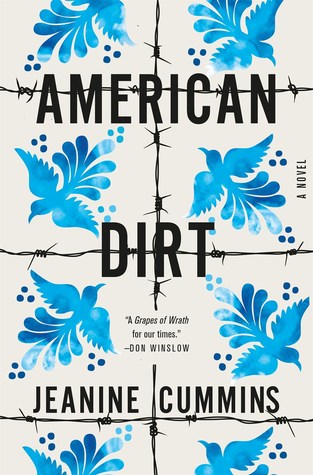
This was the novel chosen by my book group for our next (zoom) meeting, and I probably wouldn’t have read it otherwise. It’s about a mother, Lydia, trying to escape from violent drug cartels in Mexico with her young son, Luca, after every other member of her family was brutally murdered. The positive I took from the book is that it made me think about and look up on wikipedia the issues of poverty and violence in Central and South America which drive so many people to the perilous journey of attempting to get into North America as refugees/illegal immigrants.
I’m afraid that for me this is where the positive reaction ends. There is a lot of controversy surrounding the book because it was written by a privileged white middle class American woman (apparently she has discovered some small percentage of south/central American ancestry in her family tree since promoting this book….) who had very little if any first hand experience of the struggles her characters go through. I’m not saying that writers shouldn’t be able to write about things they haven’t experienced, because that would remove about 90% of all fiction (!) but the point has been raised that there are many fabulous Central/South American writers who have written books on the same topics but without the huge publicity budget and payments from publishers that Ms Cummings’ book received. Coming from Belfast, I know it can be jarring if writers set books here with the backdrop of ‘the troubles’ with no real understanding of things that are as natural as breathing to the people who actually live here.
Setting this controversy aside, though, I thought the book was just not very well written. It was like the author did lots of research, and had lots of anecdotes of terrible things that real people had suffered and just wanted to get them all into the book with little thought as to artistry, originality, or beauty in the storytelling. I may not even have bothered finishing it if it weren’t my book group read (saying that, from the chat in the book group whatsApp, I think I’m in the minority and the other members seem to have really enjoyed the book).
I’ve just started listening to the audiobook of Apeirogon by the Irish author, Colum McCann (I’ll review it here properly when I’ve finished), which is set in Palestine following two fathers, one Muslim and one Jewish who both lose daughters in the violence there. To me, this is the opposite end of the extremes and I’m already loving it. The book is a piece of art, with poetry and beauty and skill in the art of storytelling making the experience of getting to know these men and the things that shape them a much more compelling and effecting experience. It just highlights to me how bland and pedestrian the storytelling in American Dirt was.



 Sarah Wray Writer