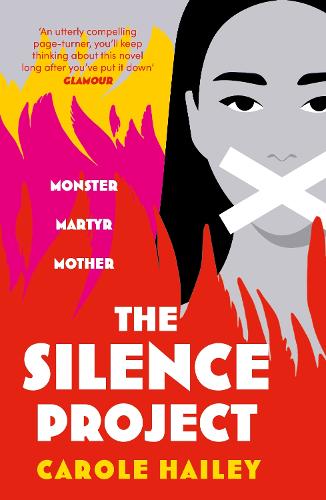
The beautiful walled city of York, with it’s towering Gothic cathedral, York Minster is the perfect setting for this coming of age/coming out, young adult ghost story urban fantasy. I have read quite a lot of books in the urban fantasy genre, and this was a very enjoyable one, up there with my favourites such as Rivers of London and the Crow Investigations series.
Charlie died of meningitis and was revived, when he got better, he had lost both his legs, but gained an ability so see and interact with dead people. We meet him a few years later when he has adjusted to what’s happened and is best friends with some of the ghosts. But when ghosts start disappearing, and a new seer is in town Charlie must get over his distrust and work with him to solve the mystery.
I really enjoyed this short novel set in Japan (I’m reading some Japanese fiction because I’m visiting my son in Tokyo in May).
Keiko, the main character is 36 and has worked in a convenience store since she was a student. She is clearly quite firmly on the autism spectrum and her whole life she has been pressured by her family and peers to change herself to fit in with their idea of what ‘normal’ should be. In Japanese culture (and perhaps everywhere, to a degree) to not fit in with the ideals of either progressing in a prestigious career, or becoming a wife and mother is seen as failure, and is shameful and embarrassing for everyone.
Keiko tries to conform to what others want from her, but the truth is she really loves working in the convenience store, and she is really diligent and good at it.
I felt for her, and I felt cross at her family for not just supporting her for who and what she is.
There was a lot that I liked about this magical realism gothic fantasy horror love story (yeah, lots of genres!). It’s a sort of period drama with marzipan, vengeful ghosts and a mystical being (who is sometimes a cat?) that has the ability to help ease the sadness of people by recording their stories on special books, and another person has the ability to make keys the sad people can use to unlock a door to a place they can visit to get closure and comfort. Yeah. I didn’t love it though. I’m not sure what it is that moves a book from like to love in my mind – for instance, The Ten Thousand Doors of January, by Alix E. Harrow, and The Starless Sea by Erin Morgenstern where both books with a similar feel and yet something about those two books blew me away and I full on love them.
It has lots of good reviews though, so maybe it’s just me that didn’t fully get it?
This is an epic tale of four generations of a Korean family trying to survive in Japan. I wanted to read a book set in Japan, as I’m visiting Tokyo and Kyoto in May to visit my son who now lives and works in Japan, and I was a little disappointed because although this book is set in Japan, it is very much from the point of view of Korean refugees and a lot of the story is driven by the persecution and general mistreatment of Koreans by Japanese.
I know that many nations (if not all…) have shameful histories of their treatment of foreigners, my own included, and yet I was shocked by how hard it was to be Korean in Japan, especially Korean Christians who were further persecuted for not agreeing to bow to and worship statues of the emperor.
For the most part the story of the family was interesting and sad although I did get a bit bored in the middle because it is a very long book!
So, I read Scharlette Doesn’t Matter and Goes Time Travelling ages ago, and it turns out my daughter had also read it and we waxed lyrical about how much we both loved it and couldn’t wait for the sequel, and then I forgot all about it. I was thinking about my daughter and our shared love of reading the other day, and I remembered this book and checked Amazon, and sure enough the sequel has been out for a wee while, so I bought it, re-read the first book and then the sequel.
It’s weird, that I remembered loving it so much, because this time around I was a bit underwhelmed – maybe I had bigged it up in my mind too much and the reality couldn’t live up.
So, the story is a quirky tale of a single girl in a dead end job getting mixed up with a crazy time traveller from the far future. She can travel with him through time because her life is so uneventful that she left no ripples in time (hence the Scharlette Doesn’t Matter) . There’s a lot of fun with nanobots and futuristic AI computers and stuff, and humour which verges on the too silly at times, but there is also plausible enough science.
In the sequel, Scharlette has to try to break the loop of two time travelling superpowers (one being humans, the other ‘germs’) who constantly jump back in time to fight the same battles over when one side gets an advantage over the other. It is quite thoughtful in it’s examination of how power corrupts and ethics get hazy when faced with dilemmas about which innocent lives to save and which to sacrifice ‘for the greater good’.
This is book three in the Stranger Times series, my favourite of all the Ciamh McDonnell books and I was super excited for this audiobook coming out.
I need to give a huge shout out to the narrator, Brendan McDonald who is FABULOUS! He does so many accents, and puts so much character and meaning into his reading, adding to what is already a great story.
Grumpy irascible newspaper boss, Vincent Banecroft, is even more grumpy and dishevelled than usual, Hannah has left the newspaper to go back to her awful ex (or has she…?) the secretary (I can’t remember her name off the top of my head) has decided to leave the office for the first time and go out on a case, and they have to deal with sad ghosts, evil cults and powerful magic users – a pretty normal day at the office of the Stranger Times!
This is the second book in the Matthew Swift series about the man who comes back from a near death (or maybe actual death) experience sharing his consciousness with an electric blue angel. It’s an urban fantasy series set in London and like Ben Aaronovitch’s’ Rivers of London series it very much pays homage to the city and to the Myths and legends surrounding it. Matthew Swift’s magic stems from the very beating heart of the city – he uses power from, for example, the utility cables all around and protects himself with warding spells using things like the rules of the London underground.
I like the series, but don’t yet love it. The things I like are the intelligent and imaginative plots and interesting characters. The thing I struggle with is the structure of the writing which is often (for me anyway) quite confusing, switching between points of view, and not using sentences. There are odd line breaks in the middle of sentences sometimes, and I’m not sure if this is stylistic or if it’s a glitch with my kindle!
I will continue reading the series and see if I grow to love it!
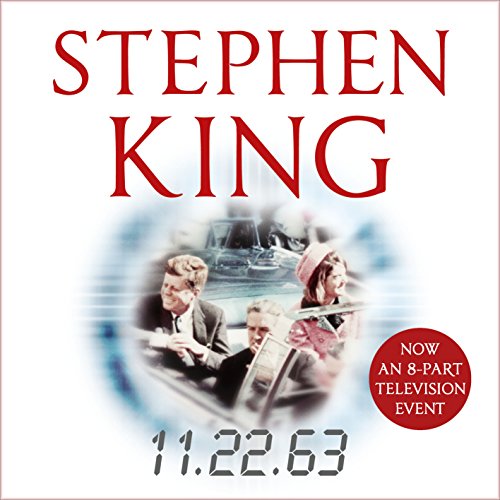
One of my favourite audiobooks last year was Stephen King’s Fairytale, so I was excited to listen to this book.
Of course the subject matter is very different. This novel follows Billy (one of his many aliases) who is a killer for hire with a conscience, in that he will only kill ‘really bad guys’.
He wants to retire, and agrees to do one last job (always a red flag in fiction!). The job involves going undercover in a apartment block community where he is posing as a writer. To add credence to his cover story, Billy decides to actually write a book, which turns out to be his own memoire, which is how we the reader get his backstory in chunks as he writes it along with the present day plot.
On the whole, I really liked the book. I got a bit bored at the part in Billy’s memoires where he relived his time as a soldier and I had to grimace and hide behind my hands in a couple of the more violent or threatening scenes, but as always Stephen King is a master storyteller and character developer, and I felt invested emotionally in what happened to the protagonists.
This was my book group read for February, and I have reviewed it on the ‘My Book group Reads’ page. Here’s a copy and paste of what I wrote:
Exactly What You Mean wasn’t universally loved by the book group members. I personally really didn’t like it at all, and the others were at best lukewarm, although a couple did say that the book grew on them. It is a ‘novel’ – at least it says it is a novel where each chapter follows different characters in different points of time who are all loosely connected to the island of Guernsey, but it is really a collection of short stories pretending to be a novel. This threw some of us, because of the disjoint between chapters if you are expecting a novel where things make sense as a whole. I found the stories to be quite bleak and depressing. Our host, Sheila had suggested the book after she had seen it praised on the BBC between the covers podcast, and we watched the podcast together. Ben Hinshaw talked about the book and actually came across really well, and perhaps if I’d seen his interview before reading I might have enjoyed it more (or maybe not!).
My daughter, Becca got married in September (it was a lovely wedding!) and I met her in-laws for the first time the day before. We got on very well, and I didn’t know that Chris’s Dad had written fiction until they sent us a flyer for a book launch event for his published collection of short stories.
So of course I bought the book and read it with the inevitable anxiety of ‘what will I say if it’s awful and I hate it!?’. Well, thankfully it is far from awful – it was obvious right away that Ian is a talented writer, and I didn’t hate it. Anyone who has read a few of my reviews might know that I’m not generally a fan of short stories, but I did enjoy reading this book. Here is a cut and paste of the review I left on Amazon:
A quote from one of the stories in The Day Chuck Berry Dies sums up how I feel about the whole book: ‘a combination of overt nostalgia and contemporary mischief, brimming with optimism and displaying a real talent for the use of language.’
Many of the stories are coming of age tales, often people later in life looking back on defining moments from their youth sometimes with fondness, or regret, or wistful wonderings about roads not taken.
My personal favourite story was ‘All About The Touch’, because it is the only one with supernatural or magical realism element, and that is a genre I very much enjoy.
As well as reading on my kindle, I like to listen to audiobooks when walking or running, and the one I was listening to while reading this book was the much hyped ‘Exactly What You Mean’ by Ben Hinshaw, another collection of short stories (although loosely connected and called a novel) and I couldn’t help comparing. In my opinion, The Day Chuck Berry Died is much superior. While both Ben Hinshaw and Ian Inglis are obviously gifted writers, I just found Inglis’s stories to be more engaging and satisfying and his was the book I looked forward to returning to.