Aw, I loved this. (I also loved the tv adaptation). Leonard and Hungry Paul are two friends united by their quiet introvert personalities and enjoyment of board games. They help each other navigate through life’s changes with family, loves and loses.
As a card carrying introvert myself, I loved this approach to the world, and I also loved that the story didn’t try to take them on a journey out of being introverts as so many stories do, as if being quiet is something that must be ‘cured’.
I always enjoy the Stranger Times novels, and this is no exception. With a Christmassy theme this book reminds me of the great Terry Pratchett’s Hogfather story. I know many books claim to be as good as Terry Pratchett, and few deliver, but in my mind C.K. McDonnell does – the Stranger Times books are genuinely funny, wise and inventive – love them. Also the narrator is as ever fabulous!
Colum McCann’s novel Apeirogon was one of my all time best reads (or listen – I found the audiobook to be utterly compelling) and this novel, thought also quite compelling, didn’t thrill me as much.
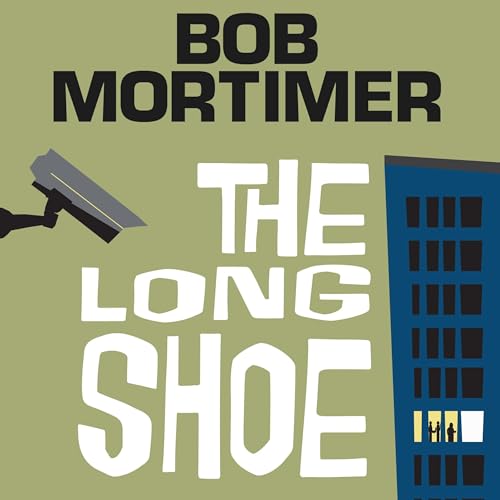
It follows a journalist, Fennell, who is given the job of shadowing the captain of a ship that fixes damage to the network of undersea fibreoptic cables. These cables carry all the information (or most – some it done by satellites) for the world wide web, a fact that I have often found fascinating – actual physical cables going all across the vast oceans!
The book has several themes – family, belonging, technology (for good or for bad), life’s work, meaning, doing your job vs doing what’s right, working out what is right. It was certainly thought provoking.
I loved The Invisible Life of Addie LaRue, by V.E. Schwab, so was excited to read this and I enjoyed it almost (but not quite) as much.
It is a vampire book, following various characters from different points in history where/when they lived prior to being turned and as they continued to live as others aged and died around them.
It is an interesting and thought provoking look at the complex emotions involved in becoming and living as ‘a monster’ – having to kill to survive, having to cope with surviving for so long, figuring out the feelings towards the one who turned them – love? gratitude? anger? Hate?
I have read a few books with similar themes and this is one of the best.
In this latest instalment Elizabeth is still coming to terms with her grief over the death of her husband, although it is becoming a little less raw, and Joyce is full of excitement over the wedding of her daughter, Joanna.
A wedding guest confides to Elizabeth his fears for his life and the gang are once more pulled into a mystery.
I did enjoy the book, with it’s usual mix of gentle humour, pathos and mystery. I liked the bit coin element as I have been learning about bit coin recently.
I will certainly keep reading the series as long as it stays this fun.
I’m so behind in my book reviews that I am writing this over two months later than reading the book and I am struggling to remember anything about it! I’m sure that tells more about my terrible memory than about the memorability of the book!
I am not good at reading non fiction – I get bored and frustrated at the way non fiction books draw out the telling of information in a way that seems to me to be pure padding, but I must have enjoyed this one well enough by the very fact that I finished it.
I do remember that, even thought the book was published in 1989, there was a fair bit about computers and how the information age is shaping our intelligence, which was quite prescient and it would have been interesting to see what he made of the new proliferation of internet browsing and AI – is this the next step in human kind – computer intelligence?
I’m sorry this review is so rubbish. My intelligence is clearly devolving!
This was part of the three Richard Bachman books in one that I read together including The Long Walk and Road Works. Like The Long Walk, it is set in a dystopian future where the general population are oppressed and impoverished and, in this book, given the opportunity to enter cruel and gruelling game shows to win the money they are desperate for, or die trying.
Ben Richards is a labourer who has frequently got himself into trouble for standing up for worker’s rights and has once again lost his job. His wife has to work long hours as a waitress and exotic dancer and their daughter is sick. They can’t afford medicine for their daughter and Ben turns to the game shows. He is selected to enter ‘the running man’ show – where contestants try to avoid ‘the hunters’ in the real world. If they are caught they are killed. Their family gets money for each day they survive as well as extra money if they kill some hunters.
After reading the book I watched the recent movie. The movie was fun, but the book is much better, especially the ending, which in the book was poignant and satisfying, but in the movie was predictable and too ‘Hollywood’.
So, my hubby and I are both recently retired, and trying to manage our money so that we don’t end up in the poor house(!) and part of this strategy involves some bit coin investment. Hubby, Paul, is very careful and has done (and continues to do) lots of research about how to do this well. He tells me stuff, and I try to take it in, but find my eyes glazing over and my mind wandering, so I when this book was a kindle daily deal, I thought I should get it and educate myself at least a little so I could stay awake and contribute to bit coin conversations.
I found it a bit of a slog to get through, but kind of interesting, and I must have taken in more of Pauls stuff than I thought because I felt like I already knew quite a lot of what it said. Economics is really quite hard to understand because once you get beyond barter and trade it all get a bit abstract and made up, especially since most countries stopped backing up their money with real value like gold.
The writer’s style was (I thought) a bit arrogant because he felt certain that he was right about everything and most everyone else is completely wrong and he didn’t pull his punches. It is a very pro bit coin book – and I get the point that money needs a real something of value to back it up and so that governments can’t just keep printing more and devaluing the money you already have, so in a sense he was preaching to the choir, but I still felt he could have been more balanced.
I did share nuggets of wisdom (?) from the book with Paul, and he was at least impressed that I was trying to learn.
Oh, this was fun – it reminded me a lot of Stephen King’s The Stand.
A deadly new virus spreads rapidly around the world killing the majority of people who contract it. Of the survivors, a significant minority develop supernatural abilities, or transform into mythological creatures (fairies, trolls, etc).
So it has the exciting beginning, where the virus is first spreading, then the apocalyptic world falling apart stage, then the coming together of groups of survivors for good or bad and the discovery by the special ones of their new abilities, and the reaction of the normals to these people.
I liked a lot of the characters and I’m excited to read more books in the series.
Early on in this book I found myself getting a bit irritated at the whole will they/won’t they thing between Robin and Strike, but I’ll admit I did get more and more invested in their relationship as the book progressed.
There was lots happening in this book – lots of character development and lots of threads of plot – from dog fighting, sex trafficking, freemasonry, silversmithing, classism etc and although I enjoyed listening, I did get a bit confused and lost at times (I thought it was just because I’m getting old and literally losing the plot, but I was relieved to see that some other reviewers also felt a bit confused at times!).
I do like this series though, and will definitely keep reading (if only because the books always seem to end on a bit of a cliff-hanger regarding the Robin-Strike situation).