I have very much enjoyed reading this whole urban fantasy series and I’m quite sad that this was the last book (for now at least) but on the other hand I’m happy for Lydia that she had a turning point in her life that better suited who she is as a person, and that the series didn’t just drag on without a clear resolution. I also liked the crossover with the Unholy Island books and I look forward to reading more of those.
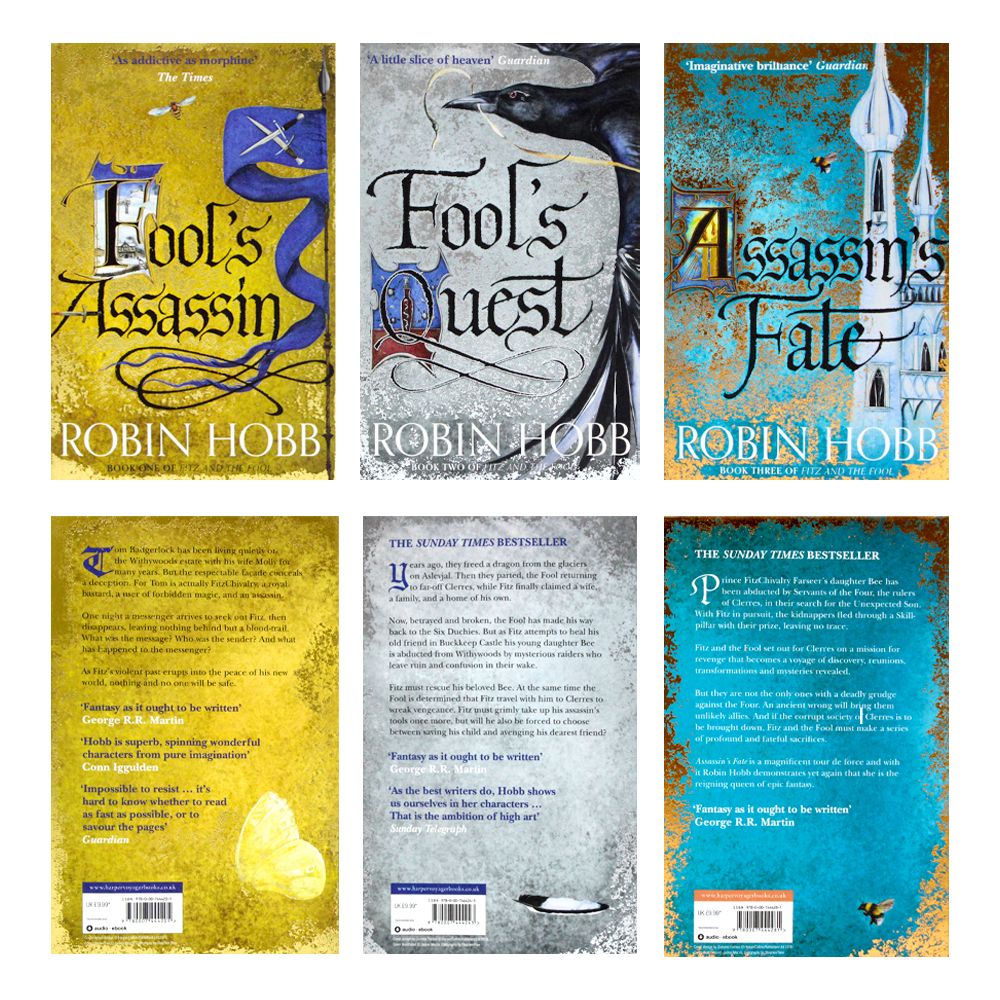
Fool’s Quest: Fitz and the Fool Book 2 – Robin Hobb – 20.03.26
Assassin’s Fate: (Fitz and the Fool Book 3) – Robin Hobb – 28.03.26
Oh my goodness, I don’t think Robin Hobb could have squeezed any more emotion out of me with a giant magical emotion squeezing machine. I loved this culmination of the story of Fitz and the Fool. The new character, Bee, introduced in these books in one of my favourite fictional characters ever – I loved everything about her story (and by loved, I mean, felt all the feels!).
This series had all the complexity, agonising tension and wonderful characterisation that embodies Robin Hobb’s whole body of work and was a very fitting conclusion to this story. ( I have heard rumours about a new book/series following the further adventures of Bee, which I would so totally read!)
This book was chosen for our next book group read weeks before we met not knowing that the USA and Israel would begin a new war with Iran, where the book is set, just days before we got together to discuss, making the subject matter very apposite to the times. (The word ‘apposite was used by one of our members to make this point which made us all very impressed with her!) The book follows two female friends from their first meeting as seven year olds in Tehran in 1950 and throughout their lives to the present day. Although the book did give some interesting insights into Iranian life and culture, and addressed many historical events that we in the book group remembered from news stories and discussed, we weren’t totally enamoured by the writing style which many of us found to be overly simplistic and also a little too ‘American’. The author, who is of Iranian descent was born and raised in America and never lived in Iran, so that is maybe why. I personally forgot to read the book until the day before book group, so read it in just two sittings and I did get quite caught up in the story to the point of getting a little teary at the ending, so perhaps I’m judging it too harshly.
I’m writing this review after having finished all the books in the Farseer world, knowing that for many reviewers, this (four book!) trilogy is their least favourite.
I have to say that, while these books didn’t stir my heart and soul as much as the ones about Fitz and the Fool, I still really liked them.
With themes of girl power, gay rights, embracing difference and of course dragons, portrayed as much as animals as they are magical and powerful beings – with personality quirks and often bad behaviour, I was fully committed to the characters journeys as well as the grand scale, prophecy fulfilling, world changing course of events that the books portray.
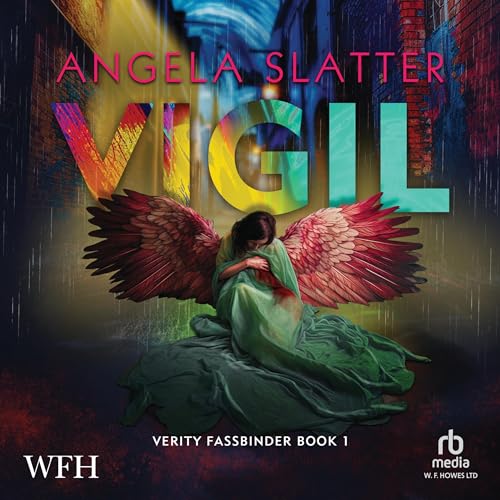
This is a nice urban fantasy novel set in Australia. The main character, Verity Fassbinder, is half human and half ‘weyrd’ (or magical) which is both a blessing and a curse in her role as a private detective and bounty hunter as she has some level of trust from both camps, but also obvious distrust too. This is the first book in a series, and in it Verity is trying to unravel the secrets from her own family’s past as well as solve the cases she is working on. It has a nice nostalgic detective noir style which I enjoyed, and I will probably look out for and read more books from the series.
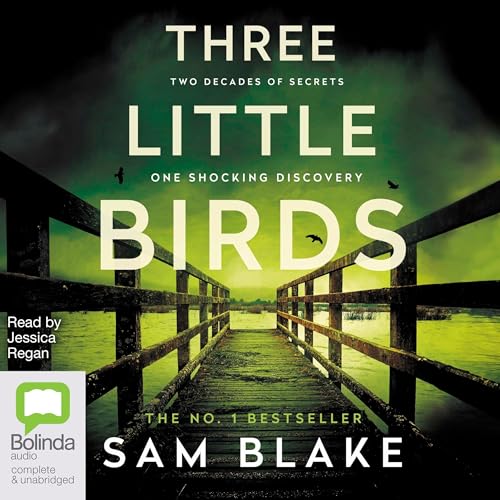
This is an Irish police procedural murder mystery with the main character being an expert in facial reconstruction and looking at cold cases. I liked it alright, but often found my attention drifting when listening to it, and ended up being a bit confused about who was who and what was going on. Couldn’t be bothered to re-listen to it though.
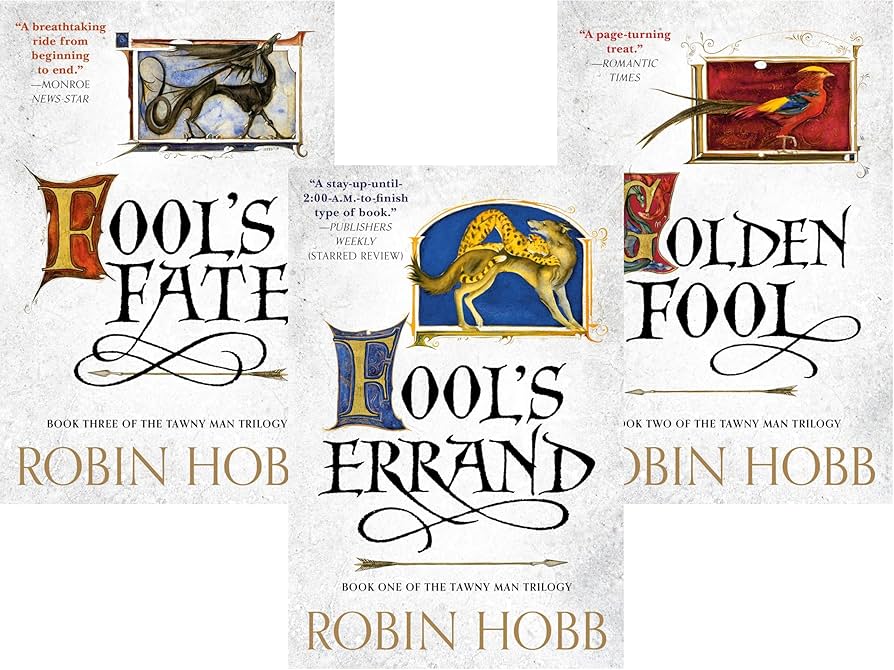
This third trilogy returns to Fitz’s life after some time has passed and he is a settled older man trying to raise his adopted son and live a peaceful life in a remote woodland location with his wolf, Nighteyes.
All kinds of things prevent this quiet existence from continuing and Fitz is drawn back into the crazy world of palace politics and intrigue and going on magical quests.
He is also reunited with his old friend; no longer ‘The Fool’ but now masquerading as ‘Lord Golden’ or ‘the tawny man’, their complex and deeply binding relationship once again tugs at the heartstrings as well as leaving so many questions unanswered.
I can’t over emphasise how much I love all of the books in Robin Hobbs’ series – such clever plots, interesting moral dilemmas and complex character building. It is a long time since I have been so totally captivated and entranced by a fictional world.
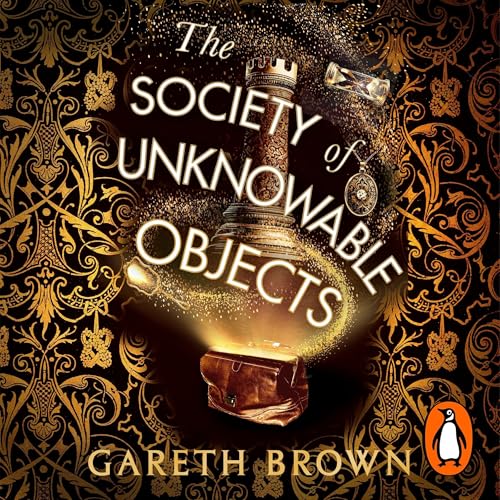
I loved The Book of Doors, by Gareth Brown, so I was very excited to read this (although disappointed that it wasn’t a hoped for sequel to the book of doors).
The genre and style is this book is similar to the first – ordinary people finding themselves as guardians to magical artifacts that could have terrible effects on the world if they get into the wrong hands.
I did like the book, it is very much the kind of story that I like. I don’t know if my feelings for it was slightly dimmed by being sad that it was not a continuation of the book of door, but I don’t think I loved it as much as that. It’s funny though, that even books I have read before and I re-read can resonate with me differently, either loving them more or less or just differently, so I can acknowledge that the book is probably just as good as the first but my reaction was off (laughing emoji!)
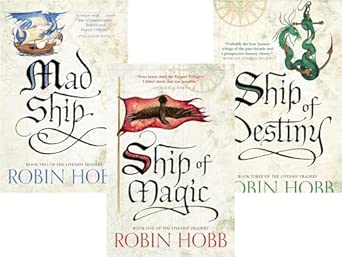
I was so in love with Fitz’s story in the Farseer trilogy by Robin Hobb that this second trilogy in her world took me a while to get into since it is set in a different country with a whole new set of characters with different cultures and mythologies.
The Liveship traders own ships made of a special type of wood that over time (generations) builds up sentience and a strong connection with the family who ‘owns’ it (the implications of ‘owning’ a sentient being are explored in the novels with people’s perceptions changing as understanding grows). The Liveships take on the memories and a mishmash of the personalities of the owners who have lived and died on their ships as well as their own mysterious memories and instinctual knowledge in a way that is similar to both Fitz’s witt and skill (telepathy with animals and with humans) from the first series although those magical traits do not form part of this series.
The series mostly follows the fortunes of three young members of a liveship family – all in their own way trying to run away from parental/societal control – trying to find their own way in the world and not be forced into paths not of their choosing, although they all discover that their destiny is inexplicably tied up with the liveships and unravelling the mysteries of their very existance.
After accepting that Fitz isn’t in these books, I did get invested and caught up in the stories of these new characters and still very much enjoyed this trilogy. I didn’t spot something that many reviewers thought was obvious until almost the very end (duh!) – I’ll not tell you what it was.
Apart from the Game of Thrones (song of ice and fire) books, I haven’t really read much world building type fantasy since I was a young adult (so a LONG time ago, ha ha!) but my son, Christy asked me if I had read anything by this author, because he thought I would like it, and since I was going to spend Christmas with him in Finland, I thought I would read the first book to tell him I did!
Well, it is now three months later (as I write this) and I have devoured all 16 big books in the series/world where these books are set. I can’t remember when I was so drawn in and captivated by characters and plots and setting and world lore etc etc as I was with these books. They are FABULOUS!
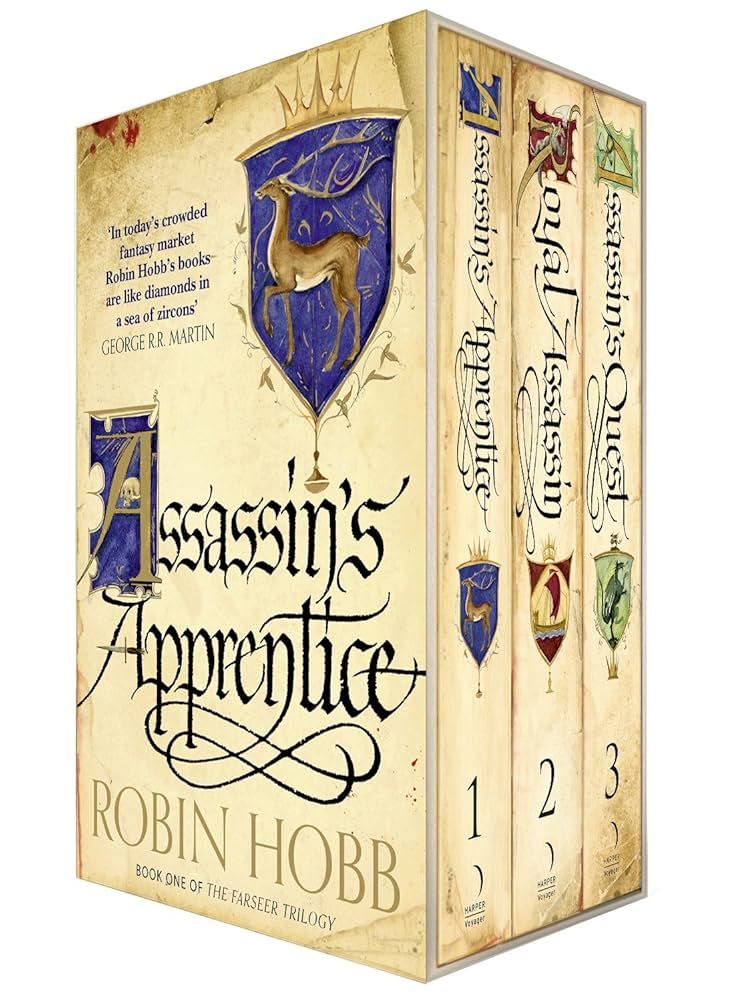
This series starts with a small boy who remembers little before he is left at the Six Duchies Castle. He is the illegitimate son of the King-in-Waiting Prince Chivalry and is named FitzChivalry (which means illegitimate son of Chivalry). He does not meet his father who is shamed and forced to abdicate as next in line to the throne, but as a potential royal heir, Fitz is kept but his life at the castle is difficult.
Members of the royal family have an innate magical ability to communicate telepathically with other who have this ability, even over long distances (as well as a few other uses) called ‘the Skill’. Fitz has the Skill, but his also has a different magical trait which is steeped in fear and prejudice even to the point of people carrying this ability being ritually executed, call ‘the Witt’.
The Witt allows Fitz to understand and communicate with animals, and to form a very strong bond with one chosen animal and share feelings, senses, and thoughts with this bonded animal.
Fitz is raised by gruff but well meaning stable master, Burrick, who had been Chivalry’s friend and guard and is also trained in the art of being an assassin by the mysterious Chade, who lives in secret rooms and passages in the Castle.
Fitz also makes friends with a child of his age who works as a jester and companion to the aging king in the castle.
The trilogy follows Fitz growing up in the castle, finding out who he can and can’t trust, falling in love, going on a quest etc.
He is a very flawed character and often infuriatingly so – but then he is a child and then a teenager in these books and although he has a heart of gold, he is often swayed by all the stupids that come with being a boy or an adolescent young man.
Mythical dragon lore is often touched on in this series, as well as the ancient civilisation known as the Elderlings who co-existed with dragons in the past and even though they don’t feature prominently in this series, they are significant to the story of the whole 16 book series.