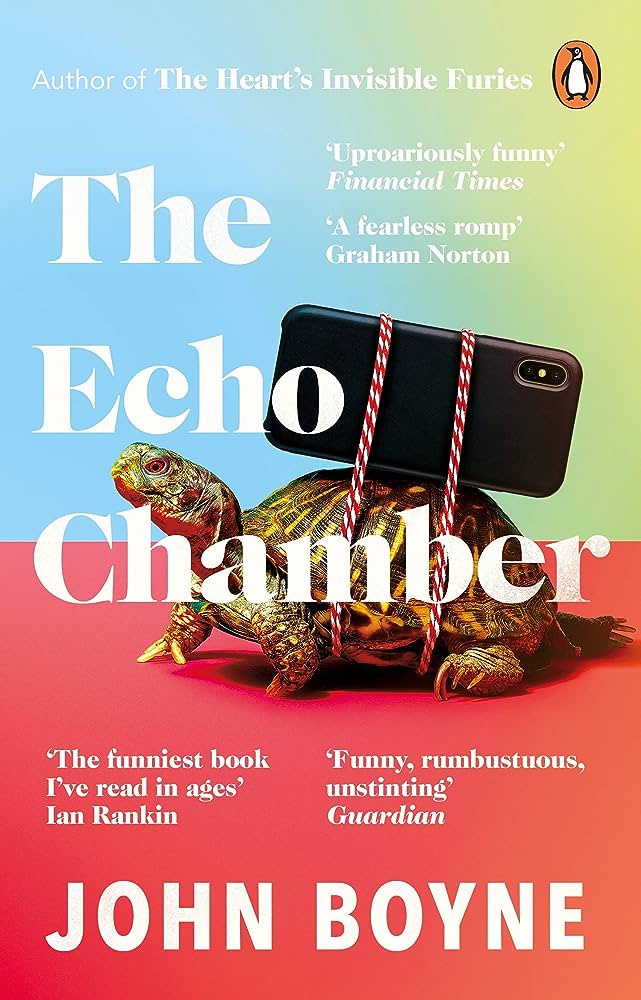
I’m not sure what to make of this book. I was in places quite funny, and I did laugh once or twice, but on the whole I found it more annoying than funny. Like an elderly relative at a party thinking it’s really funny to make endless jokes about the young people and their ‘social media’ it gets a bit old.
The characters are supposed to be unlikeable, I guess, and they are. Its a farce, and maybe that is reason enough to forgive the stream of ridiculous coincidences. I don’t know, the book gets lots of stars on Amazon, so maybe it’s just not my cup of tea.
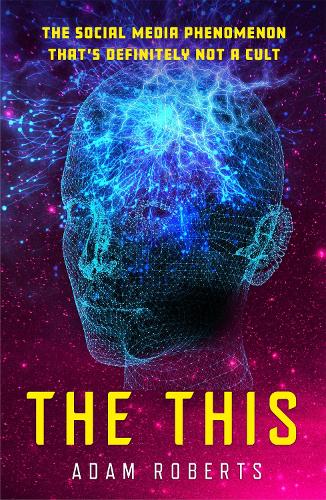
Typically of Adam Roberts sci-fi books, The This is quite mind-bending and sweeping in scale. The first couple of chapters were very ‘out-there’ and I wasn’t sure what was going on, but all did become clear as the book progressed.
The This is an interesting study of the evolution of humanity when technology to allow people to interact with their social media accounts using just brain waves (ie thoughts) became a massive hive mind entity that went to war with the individual humans not hooked up to ‘The This’.
The book raises moral and philosophical questions, as well as being a fun read. Not my favourite Adam Roberts book (which is still Bête) but still good.
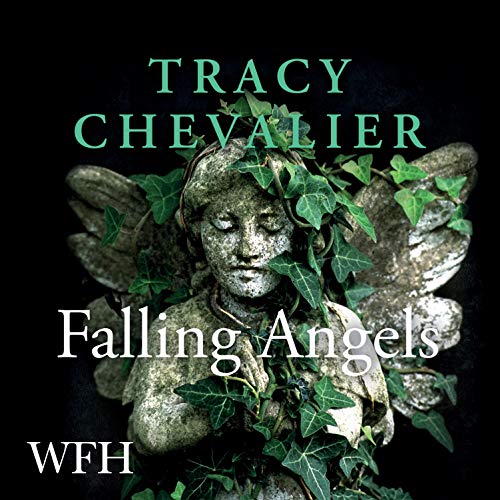
I enjoyed this audiobook of Tracy Chevalier’s second novel. It begins in a London graveyard at the turn of the Twentieth century when two well to do families are visiting their family plots to (quite strangely, I thought) mark the death of Queen Victoria. The daughters of the families (aged 6/7 at the beginning of the book) strike up a friendship, and much of the story is told from their perspective, although other characters get their chapters too. There is lots of stuff about class and society – the girls start an unlikely friendship with the poor gravediggers son, and he also becomes pivotal to the plot. One of the mothers joins the suffragettes movement, and there is some interesting digression into that world too.
For once I wasn’t bothered by the posh English narrator, since that was entirely fitting for this London society period drama.
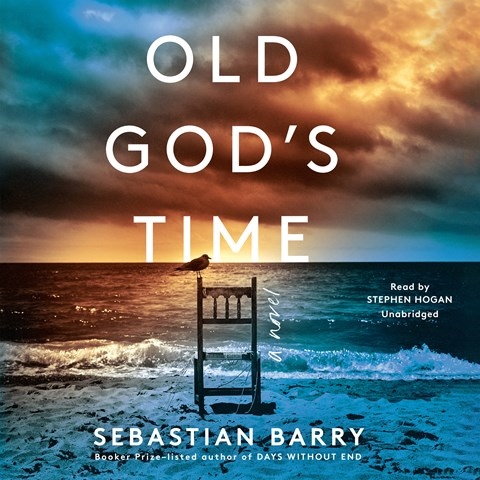
This was a very beautiful and very sad novel. The narration by Stephen Hogan was amazing – such a lovely Irish accent, and the pathos and feeling that he put into what he was reading – it felt like listening to a great actor soliloquizing on stage (or indeed to a broken man bearing his soul with total honesty and vulnerability).
It follows a retired policeman living in a small seaside town in Ireland who has to revisit his heart wrenchingly sad past when he receives an unexpected visit from his former colleagues.
As we piece together his back story, the full horror of his existence is revealed.
Listening to somebody’s sad life story may sound like a dour experience, but I was gripped and entranced by the book, and ultimately hugely satisfied with how everything fitted together and I thought the ending was just perfect.
Perhaps this audiobook suffered in my estimation by me listening to it immediately after Abraham Verghese’s sublimely fabulous ‘The Covenant of Water’ but I’m afraid I found it, for the most part completely uninteresting. In fact vapid and tedious.
The narrator was great – I loved her Kiwi accent, and I felt she put as much feeling and drama as was possible given what she was reading. I am amazed that this is written by the same author who wrote the wonderful novel The Luminaries, which I loved.
I got slightly interested towards the end, but perhaps mostly because I could tell it was going to be over soon.
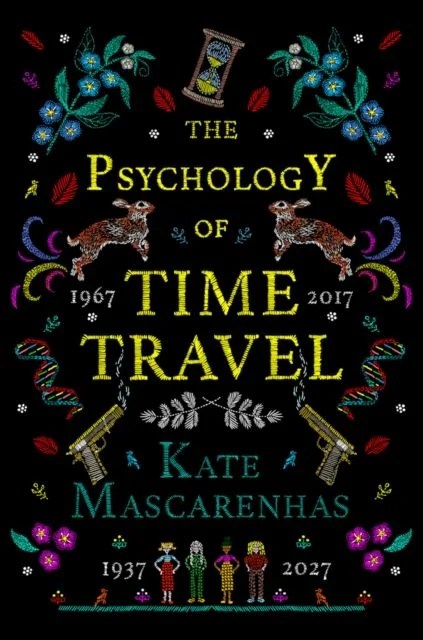
I really liked this book. All the main characters were female, including the scientists who developed and built the first time travel machines and subsequently ran the company that owned and controlled them. Other than this, the book felt like a classic old style sci-fi.
Unlike many time-travel stories, there was no danger involved in meeting your older or younger selves, in fact it was a regular occurrence that ‘green’ (younger) and ‘silver’ (older) versions of a person to meet up for special occasions like weddings where half the guests were all one person at different ages!
There was a murder mystery element to the story, which kept things moving along, but even without that, I think the developing character arcs would have kept my interest.
I just looked up the author on Amazon, and I see that I have one of her other books in my audible library (The Thief on the Winged Horse) so now I’m excited to listen to that.
Abraham Verghese’s previous book, Cutting For Stone, is by far my favourite book that my book group has read over it’s twenty years and so I was very excited for this long awaited new novel.
At over 31 hours the audiobook is very long, but at no point during the listen was I bored, and now that it’s over I feel bereft and wish it had gone on longer.
The story follows three generations of a family in India from the time of the second world war until recent times. The family tree shows a curse of death by drowning and much of the story’s tragedy and triumph revolves around this curse. I loved everything about this book, from the narration by the author, through the beautiful use of language evoking rural Indian life and bringing it alive, the well rounded and fleshed out characters, the heart-wrenching sadnesses and redemptive journeys.
Like Cutting For Stone, the book contains a lot of medical and surgical detail, which I found very interesting and nail-bitingly tense at times. I also loved the use of artistic skill as a form of expression and healing – writing, drawing, sculpture. I liked the strong female characters in what could have been a male dominated world.
Basically, I thought this book was just fabulous and about as perfect as a novel can be.
I’m still enjoying this spin off to the Matthew Swift Midnight Mayer series more than the original although you do have to be familiar with the Midnight Mayer books to understand what is going on in these.
I like the character of Sharon Li, Sharman and leader of the Magicals Anonymous, the rag-tag band of anxious or lonely magical beings – a gay vampire with OCD, a druid with allergies, a 7 foot troll who is excited by gourmet cooking, a woman who sometimes turns into many pigeons etc. So the style of the book is quite comedic, while still addressing deep issues and has lots of action (a little too much action for my taste, but maybe I’m just too old for that kind of thing…?)
I loved this book! I was enraptured listening to the tale set in an alternate present in America where after a global financial crisis which crippled the American economy is blamed on China, anti Asian feeling is rife and extends to all East Asians and even to anyone displaying any interest in or sympathies towards Asian people or culture. The government removes children from families it considers to breech these anti-Asian rules to be raised in foster homes where they can be taught ‘proper American values’.
We are told the story from the perspective of 12 year old Bird, who has been raised by his white American father after his ethnically Chinese American mother vanished years earlier. Bird sets out to find his mother and uncovers the underground movement helping the severed families.
In the afterword, the author talks about the inspiration she took from the times children have been taken from their families in this way in the real world such as indigenous children taken to be raised in orphanages, or more recently, refugee children separated from their families. I found this very moving.
(And of course, Lucy Liu’s narrating was awesome!)
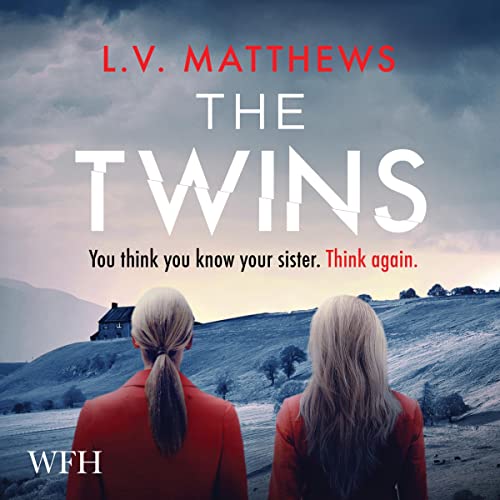
I did not like this book. Recently I’ve read and enjoyed several books recommended by my daughter, Becca, and she recommended this one. I should have known it would not be my cup of tea – I rarely like this kind of best seller psychological thriller , although sometimes I do… I don’t know what it was about it which just really annoyed me – the unlikeable characters (even the ones I think we were supposed to like…) or the twist that has been done before (and better). Still, the book gets lots of positive reviews, so maybe it’s just something about me that I don’t get it.
(Also, I didn’t even realise that there were two different narrators, because to me at least they sounded the same, so that was lost on me!)

 Sarah Wray Writer