This is a lovely fairy tale of a book that is reminiscent of Joanne Harris’s book Honeycomb. While honeycomb had magical anthropomorphic bees this story is about magical anthropomorphic butterflies and moths.
Snippets of the story are told like a straight magical fairy tale story, but the bulk of it happens in the ‘real world’ when a shy young man who works in a camera shop in London helps a homeless man and falls in love with a beautiful girl whose face he can never quite remember, and is drawn in (like the lovely novel by the maybe not so lovely (yikes) Neil Gaiman, Neverwhere) to a magical quest across time and reality to find true love and end a war.
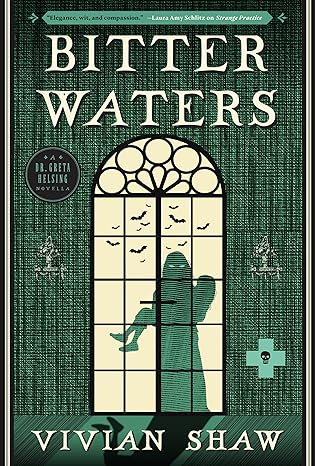
Bitter Water (Dr Greta Helsing Novella) – Vivian Shaw – 21.07.24
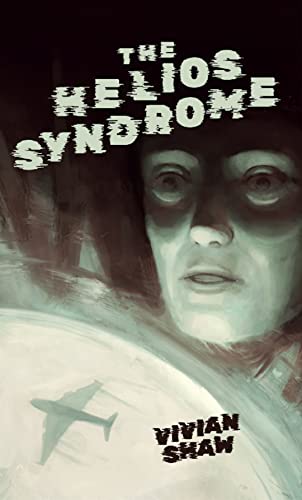
The Helios Syndrome – Vivian Shaw – 23.07.24
Version 1.0.0
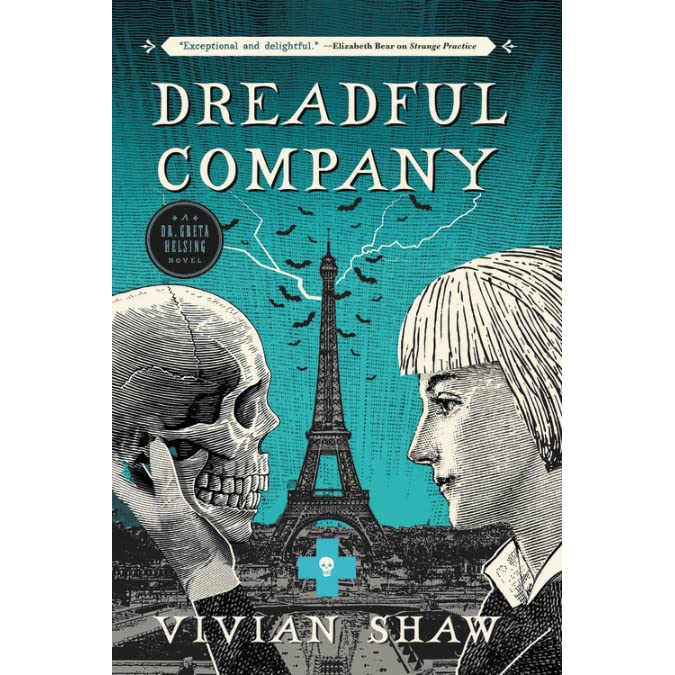
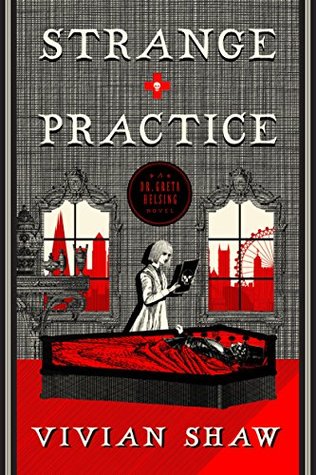
So, I bought Bitter Waters, which is a novella companion to the Doctor Greta Helsing series by Vivian Shaw, and when I started reading it, I remember how much I loved reading the other books in this series, and also how much of the intricacies of the plot that my aging Swiss cheese memory has removed from my mind, so, I re-read the first three books before reading this novella, and then bought and read The Helios Syndrome because I was having such a fun Vivian Shaw ride!
Greta Helsing is a modern day descendent of the Van Helsing family, famous from the world of gothic literature as vampire hunters. Times have changed, however, and the majority of vampires and other non-human individuals just want to live peaceful and undisturbed lives and the Van Helsings have dropped the ‘Van’ and the hunting and instead studied medicine as well as anatomy and physiology of vampires, ghouls, mummies, and other ‘mythical’ beings in order to help to keep them healthy.
This is a lovely series with some excitement and peril but lots of nice relationships (some romance) some humour and great characters. I can’t wait for the next instalment.
In the mean time, I read The Helios syndrome, which is either a stand -alone or the beginning of a new series (I would read it if it was!). Again there is magical realism, in this case the main character can use divination with a Chrystal ball as well as talking to dead people. He is hired by people investigating air crashes and has a very exciting adventure guided by a dead pilot and at times by an aeroplane that talks to him in his dreams!
It’s less gentile than The Greta Helsing books, and set in America rather than England, but still very enjoyable.
Some people are fans of Stephen King’s earlier works over his more recent books, but I am in the opposite camp. I like how the master story teller that is Stephen King has become more gentle and contemplative in his stories, without losing any complexity, character building and tension (in my humble opinion!).
I really wanted to read Doctor Sleep, but since I had never read The Shining (I don’t remember watching the movie, although my hubby insists that we watched it together years ago) so I (with some trepidation) listened to The Shining first, then Doctor Sleep.
So, yes, I think it is important to read both books because so much of the character of Danny, the main protagonist of Doctor Sleep, is based on the journey he went on in The Shining, where he was a small boy in a terrifying situation, but I did much prefer the sequel to the original!
The ladies in my book group are horrified and mystified at my being a fan of Stephen King because they just see ‘horror’ and think gore and violence and evil, and yes, those things are in these books to an extent, but there is so much more – so much goodness and strong moral character overcoming the terrible challenges that the evil puts in their path, and ultimately so much optimism and life affirming joy.
I kind of (hmm, not so much) enjoyed The Shining, but I loved Doctor Sleep!
I don’t usually like memoir type books, but I really enjoyed this one. I was not aware of Chris Broad’s YouTube channel before reading this, but I was drawn to it because my son Danny lives in Japan, and my hubby and I visited him last year.
The book describes how Chris Broad moves to Japan almost on a whim to take part in a program for native English speakers to work as language assistants in Japanese high schools.
It’s an interesting and honest retelling of his first experiences living and working in Japan – the culture shock and the struggles learning the language and I liked that a lot of his experiences were the same as my son’s and that he visited some of the places that we visited on our recent trip. I might even start watching some of his videos now!
It’s very rare for me to give up on a book (especially an audiobook) and I did manage to get through two thirds of this one, and wondered if I shouldn’t just stick it out until the end, but then I thought about all the unread books out there, and the limited amount of time left in my life and decided it was dumb to continue a book that I wasn’t enjoying.
So, why didn’t I like it?
The book begins with a man being constantly respawned in a terrifying life threatening situation with no memory of who he is and what is going on and having to fight for his life over and over again (like in a video game, when he is killed, he just comes back to the last ‘save point’). It’s hard to describe what happens next without giving spoilers, but I just found the violence to be too relentless and gory and over the top, with unnecessary puerile toilet or sexual humour thrown in. I thought it could have been written by an exceptionally talented teenaged boy (talented because the writing isn’t bad just full of the sort of thing that teenaged boys are famous for enjoying).
There are a lot of positive reviews out there for this book and the author, so obviously there is a fan base for it, but this author’s work is definitely not for me.
This is the sequel to In The Blink of an Eye – (or second in the series, I guess) and as least as enjoyable as the first. It’s a police procedural murder mystery, with the twist being that one of the two main detective characters is an AI – projected as a hologram of a handsome black man.
I did like pretty much everything about it – the human detective is a widowed woman who’s only son has just left for university and she has all the feels that go along with that. The AI is unfailingly logical, but also dipping his toes into the murky waters of self awareness and exploring how he feels about that and his place in the world. The relationship between the two reminds me of Captain Kirk and Mr Spock – the clash between being led by hunches or instinct vs being led by logic and facts and the growing (sometimes grudging) respect of the one for the other.
The murder mystery element was also well done with a satisfying ending – I’m looking forward to the next book in the series.
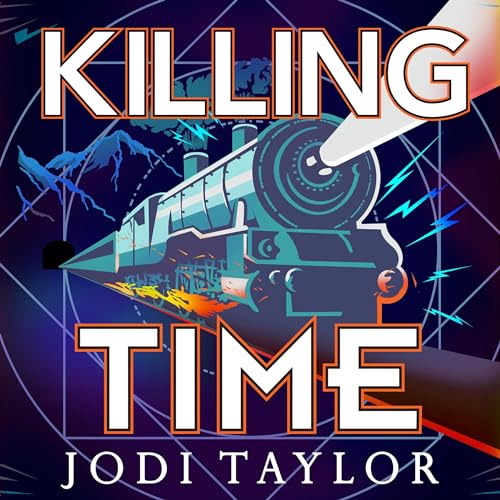
I’m still very much enjoying Jodi Taylor’s Time Police series. This time team weird (or at least some of them) are stuck on a crazy malevolent slightly sentient train hurtling through time and space with a bad guy from their past who has murderous intent. Meanwhile the rest of the time police try to free themselves (literally) from the results of some R and D that went wrong back at headquarters to be able to attempt a rescue.
More fun character developments, exciting plots and humour.
This book is verging more into the ‘chick lit’ or ‘rom com’ territory than I would usually like, and yet, I did, on the whole like it.
Set in the 1950s, a young English woman, living in London and making a living creating new perfumes is jolted by visit to a fortune teller that sets her life on a totally different path leading her from London to Istanbul.
There’s a will-they/won’t-they relationship with her initially grumpy but dashing neighbour, and their relationship reminded me of the old black and white movies in quite a fun way.
The thing that annoyed me most about the book was the glaring grating Americanisms. Apparently the original French novel was translated into English by an American, who presumably doesn’t understand how British English works. Grrrr.
That aside though, it was a nice (if a little predictable) nostalgic feeling novel.
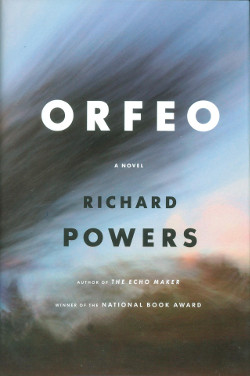
Orfeo is one of those booker longlisted books that you have to read with a dictionary to hand, and in this case maybe an expert in classical and modern composing as well.
It follows an old man on the run from the authorities because of the biological lab they discovered in his home. He looks back on his life as a composer and teacher of composition who had spent years trying to push the boundaries of modern music and style. There is a lot of music theory type stuff, and history of music etc which is quite heavy going.
Also there is the age old story of someone obsessed with their creative zeal to the detriment of their relationship with friends, lovers and children, wondering which they regret more – not achieving the levels of greatness they aspired to, or losing the ones who they loved most along the way.
I did enjoy it (I think) in the way that you enjoy a slightly hard workout that you think is probably doing you good and you can feel smug when you have completed it(!).
I do love a good Stephen King novel, and lucky for me there are millions of them – I still have quite a few to get through!
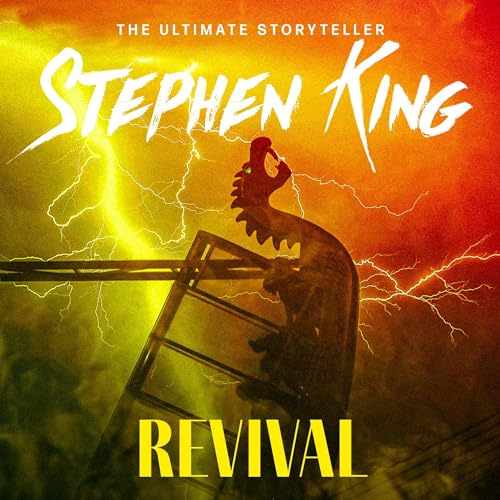
Revival is a funny one (not funny ha ha, funny odd). A lot of the book reads like a straight coming of age, life story journey following Jamie, five years old at the start of the book, living in a quite religious family in middle America from the moment he meets the new Pastor of his church, Charles Jacobs, a young man with a lovely wife and baby son who has an interest verging on an obsession with electricity.
When Jamie’s big brother has an accident damaging his larynx which threatens to leave him mute Pastor Jacobs tries an experimental electric shock treatment on him which cures his affliction.
Throughout Jamie’s life he has interactions with Pastor Jacobs, who’s manipulation of electricity seems to have power for great good and great evil, and towards the end of his life (and the end of the book) things take a very weird turn.
The last act of the novel is suddenly full of supernatural, metaphysical, horror, which I wasn’t sure what to make of, but still, I did still really enjoy the book.




 Sarah Wray Writer