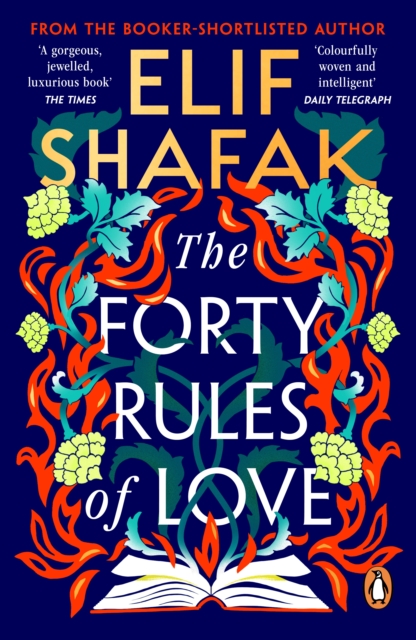
I found this book interesting and strangely compelling. It follows dual stories – modern day American, Ella, who has been a relatively happy homemaker, wife and mother, even knowing that her husband regularly cheats on her with other women, until her children are grown and her daughter announces her engagement and she strongly advises her against marriage. At the same time, she takes a job outside of the home (well, actually working from home, I just mean outside of homemaking) as a reader for a publishing agency and the first book she is tasked with reading is Sweet Blasphemy, a retelling of the life of Shams of Tabriz, a thirteenth century traveling dervish (a kind of mystical sect within Islam) and his relationship with the famous Turkish poet Rami, and we read this book along with her.
She is drawn to the religious teachings about love in this book and begins an email conversation with its author, Aziz Zahara, a man with a difficult past who found peace after converting to Sufism. Ella and Aziz form a deep connection and I did find myself itching to get back to their story even though all the deep philosophical stuff was in the Sweet Blasphemy chapters.
I had not really known much about Islamic sects prior to reading this book, and I was struck by similarities to Christian teachings and different groups’ or individuals’ interpretations of them.
I’m not sure I really liked Shams of Tabriz, he seemed a bit full of his own wisdom, especially when he agreed to an arranged marriage and refused to have any relations with his young wife (because he was above all that kind of thing) which left her horribly hurt and feeling useless in a society where wives produce children and not much else.
He was, however, less judgey of outcast groups in society as other religious types of his era (and probably every era!) which was nice.
 Sarah Wray Writer