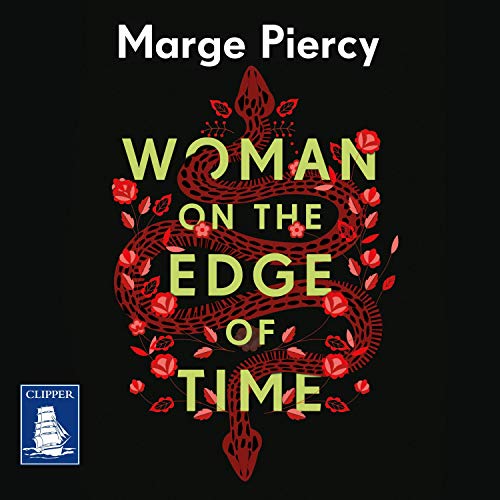
Written over forty years ago, this dystopian/utopian, speculative, sci-fi, feminist novel (I know, that’s a lot of genres!) feels prescient and relevant to our times. The main character, Connie, is a Latin American woman struggling to cope with poverty and abusive relationships. When she defends her cousin by attacking her violent pimp he has her committed to a mental asylum. Peopled largely by women and ethnic minorities, the asylum is like One Flew Over The Cuckoo’s nest – with cruel and self serving doctors and care workers who treat the patients more like sub-human test subjects to experiment on.
Connie is contacted by a person from the future who only she can see, and she is able to leave her body in a trance like state to travel with this person to the future – the utopian future where there are technological advances unheard of in the 1970s (when the novel was written) like wrist computers, and interactive touch screens and solar powered fully automatic factories, but also a return to subsistence farming and shared belongings because of respecting the earth and its natural resources. The future people have abandoned gender roles, having neutral personal pronouns and having both male and female born people able to breast feed babies grown in artificial wombs. In this future positions of authority and government are rotated so everyone gets a turn and democracy is king.
However, there is a darker possible future that Connie also visits, where the world is so toxic that people have to live underground, where men rule the roost and women must augment their bodies to be attractive enough.
A battle over which future will win out rests on Connie as a turning point in history like a small pebble in a stream might change it’s course over time.
The novel always leaves the possibility that all of this is in Connie’s mind and not based on any actual reality, in fact, there is a confusing (at least I found it confusing) sequence with a battle and the enemy seem to be people who work at the asylum, lending credence to the psychosis rather than reality theory, at least for that timeline.
I did find the book very readable, and thought provoking – in fact it was one of the books that I talked about in depth to my (long suffering) husband on our nightly dog walks because my mind was full of thoughts and implications that it raised.
 Sarah Wray Writer